2cornucopias

Archive for the ‘13 History’ Category

Missing a Body?

In 13 History on 2011/04/09 at 8:15 PM

Have you ever noticed that practically in all museums in the section of Ancient Rome, there are countless of heads impaled on blocks.  Where are the corresponding bodies?

It was obligatory in Roman days that every city had a statue of the current emperor.  As the Roman Empire expanded and governing it became very difficult, there were constant changes in leadership.  At one point, as series of emperors termed the barrack emperors followed each other in dizzying succession as the army of one province chose its leader deposing  another leader from another province.

Statue sculptors could not keep up with the demands for statues, so they just make new heads and screwed them on to established bodies.  It is hard to screw  one things onto another right when they were not made for each other and thus many ‘did not have their heads screwed on right.’

Man is proportionate, and therefore, some small heads ended up on large bodies and large heads on small bodies.

When invaders  attacked, they just knocked the head off the block.
Bagels, Croissants, Cappuccino and Shish Kabobs

In 13 History on 2011/04/09 at 6:57 PM

So terrified were the Moslems at the Battle of Vienna 9 9/11/16830 that it was all over in three hours when they fled fearing that John Sobieski’s winged-horsemen were avenging angels.

Bagels were a new roll created by a baker to commemorate the rounded stirrups of John Sobieski’s valiant horsemen.

Croissants were also another baked good to mark the defeat of the Moslem who have a crescent moon as their symbol.  The name croissant is derived from the French for ‘crusades’ since the Christian forces were fighting a defensive war against the invading Moslem forces.

Cappuccino was concocted from the bags of coffee the fleeing Moslems left behind.  The brewer added cream and honey. The white foam on the brown brew was named Cappucino in honor of the Capuchin Abbot who led the Christian army into battle.  The Capuchin habit is brown with a white cowl.

A note on the Capuchins:  Since that battle, all the Holy Roman Emperors are buried in the Capuchin Monastery.  The last one to be buried there was Empress Zita (who died in exile in Royalston, Massachusetts.)

The shish kabob was the Moslems post crunch of battle souvenir.  In both the Seige of Vienna and the Battle of Vienna, reconnaissance troops would rip nursing babies from the arms of their mothers and impaled them on their swords in front of their horrified eyes!

See Category: History for entry entitled 9/11.

Ancient Rome on Right to Life

In 13 History on 2011/04/09 at 2:42 AM

If the Jews had to get Pilate to sentence Jesus to death because only the Romans could impose the death sentence, how was Herod able to slaughter the innocents?

Suetonius wrote that the Romans so feared a prophesied king who would rule the world that when Herod notified the Emperor of that the Magi had come searching for the KING, the Emperor ordered that all babies born in the entire Roman Empire that year were to be put to death.

Herod was the only provincial ruler who did it.  The rest of the empire ignored the edict because they considered the law immoral, believing in the right of the child to live.

Devious Icelandic Raider

In 13 History on 2011/04/09 at 1:58 AM

The chieftain of an Icelandic raiding party that cruised the Mediterranean in search of booty defeated a strong walled town by a ruse.  Having been in Constantinople, he claimed to be a Christian and requested that since he was dying he wished to have a religious burial.  Dying a few days later, his disarmed men were permitted to bring his wooden coffin into the Church.  Towards the end of the long ceremony, the congregation was frightened when the corpse suddenly sat up, jumped out of the coffin, sword in hand while his men rushed in to get their swords on which the drugged chieftain had lain.  Now, awakened from deathlike dormancy, the warriors conquered easily.

Death-appearing inducement drugs were a favorite stratagem which could only be used once in an area.

Clever Icelandic Raiders

In 13 History on 2011/04/09 at 1:44 AM

While in Iceland, I read the Sagas of the Icelandic seamen.  One group used to Volga River as its avenue to the Mediterranean.  Having reached a walled city in the Italian peninsula, they found the walls unbreacheable.  Astute as they were, the pondered the situation.  Noting that every morning the birds who nested under the eaves of the thatched roofs flew into the nearby woods to obtains sustenance for their fledglings, they set their fowlers to catch them. Having caught a substantial number, the falconer proceeded to deposit a wad of wax with a wick onto their backs.  Setting the wick alight, the anxious birds flew back to the town and incinerated the thatched roofs.  Running out of the town for safety, the raiders strode in as conquerors.  Primitive people used their wits.

Christian and Historian

In 13 History on 2011/04/09 at 1:32 AM

Recently I heard a noted historian say that a historian is trained to be a cynic.  It is said that a cynic is considered a doubter. In the discipline of history, one has to search for the truth.  This implies the need to question in order to verify the credibility of the statement or source or both.

A Christian historian certainly follows this methodological procedure which is a hallmark of historiography; however, he does not use the same measure for matters of faith because these are of a totally different nature.  The matters of faith are revealed truths, which Jesus Christ the Son of God revealed.  The believer accepts these easily because he is accepting them on the Word of God who can neither deceive nor be deceived.

The Christian historian has one tremendous advantage in that he can more accurately evaluate the past in the light of Truth and apply it to the present, so that it can be a reliable guide for the future.

Consider 2500 Year Old Advice

In 13 History on 2011/04/09 at 12:57 AM

He who knows when he can fight and when he cannot, will be victorious.

If ignorant both of your enemy and yourself, you are certain to be in peril.

He who is prudent and lies in wait for an enemy who is not, will be victorious.

Opportunities multiply as they are seized.

It is only the enlightened ruler and the wise general who will use the highest intelligence of the army for the purposes of spying, and they thereby  achieve great results.

Secret operations are essential in war; upon them the army relies to make its every move.

That general is skilful in attack whose opponent does not know what to defend; and he is skilful in defense whose opponent does not know what to attack.

All war is based on deception. All war is deception.Be extremely subtle, even to the point of formlessness. Be extremely mysterious, even to the point of soundlessness. Thereby, you can be the director of the opponent’s fate.

Secret operations are essential in war; upon them the army relies to make its every move.

Strategy without tactics is the slowest route to victory. Tactics without strategy is the noise before defeat.

Supreme excellence consists in breaking the enemy’s resistance without fighting.

The quality of decision is like the well-timed swoop of a falcon which enables it to strike and destroy its victim.

The supreme art of war is to subdue the enemy without fighting.

There has never been a protracted war from which a country has benefited.

What is of supreme importance in war is to attack the enemy’s strategy.

To fight and conquer in all our battles is not supreme excellence; supreme excellence consists in breaking the enemy’s resistance without fighting.

Regard your soldiers as your children, and they will follow you into the deepest valleys; look on them as your own beloved sons, and they will stand by you even unto death.

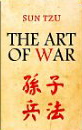
The Art of War, Sun Tzu 544 BC=496 BC

Thucydides For Today

In 13 History on 2011/04/03 at 1:05 AM

In 431 BC Thucydides wrote in his HISTORY of the PEOLOPONNESIAN WARS that the inferior mind is more often successful than superior mind because recognizing his weakness, the inferior one strike suddenly and unexpectedly, catching off guard the superior one, which is actively  analyzing and planning logically its moves.

Applying Thucydides to today: The non-religious mind is more often successful in promoting its ideas and actions because while less in tune with reality and having less knowledge of the effects and ramification of the proposed ideas and actions, it simply strives to implement them for the sake of implementing and enforcing its agenda.

The religious (Christian) mind has a greater awareness of reality plus the requisite knowledge of effect of ideas so that it can weigh the pros and cons of a proposal. This is why the products of the non-religious are often deficient, but popular, while the product of the religious person (assuming a proper relationship with God) comes to more realistic conclusions which might not be very popular. Sin is easy to promote and readily attracts adherents while virtue often leads a lonely life. The non-religious mind is concerned with the material world, knows what it wants & pursues it. The religious mind has different values, beyond the material,  and strives to attain transcendental goals.

The Pygmies And The Elephant

In 13 History on 2011/04/03 at 1:01 AM

Do you know how three pygmies can bring down an elephant?

One pygmy dances in front of the elephant to distract it while two others cut the Achilles tendon of the hind legs!

One-Cent Turn Of Fortune

In 13 History on 2011/04/03 at 12:52 AM

Actually, it would have been more practical to build a canal across Nicaragua instead of Panama.  However, the inopportunely-timed issuing of a one-cent postage stamp showing an erupting volcano and the caption: Nicaragua, Land of Volcanoes, lost Nicaragua the opportunity.


Screen Shot 2013-08-17 at 12.17.58 PM


The United States was actually considering building a canal across Nicaragua instead of Panama.  However, the inopportunely-timed issuing of a one-cent postage stamp showing an erupting volcano  lost Nicaragua the opportunity.

An American senator in favor of building it through Panama purchased enough stamps to mail each senator a one of the stamps with a note showing the reason against building it through Nicaragua.

David McCullough has written a detailed historical work called THE PATH BETWEEN THE SEAS: The Creation of the Panama Canal – 1870-1914.  It is available at your local library.  Call # 986.3 McCullough.