2cornucopias

Archive for the ‘14 Book Corner’ Category

Guiding Media?

In 14 Book Corner on 2011/05/23 at 11:18 PM

Have you ever noticed that when a death occurs in movies or TV, or is portrayed in a novel, there never seems to be any consequences for the deceased. He or she is just dead and gone. The death is seen as the logical result of a series of prior actions or events. More often than not, the deceased had previously, perhaps even for a long time, engaged in actvities which 75 years ago would have been called “sin”: a word that is totally taboo in the media today….and in too many churches.

In 1960 Harold Gardiner, SJ, wrote an outstanding book: NORMS FOR THE NOVEL. (his observation apply equally to the TV and movies.)  This book was and should be considered the best guide for evaluating novels from a moral perspective.

In teaching World Literature, I used his principles to guide students in gaining knowledge and understanding.   After analyzing and synthesizing the themes, they could apply moral principles in order to make right judgments which were consistent with objective reality, truth, and moral standards.

Fr. Gardiner explained how a novelist can deal with any moral deviation correctly if he presents a moral deviation.  In other words,  fornication, adultery, incest, lying, stealing, coveting, for example, may be included in a novel or story if they are shown as moral deviations.  Unfortunately sin is a part of the human drama and should be recognized as such.

Two powerful examples: In Count Leo Tolstoyʼs ANNA KARENINA, the illicit adulterous relationship of a woman destroy not only her, but her son, husband, lover, and leads her to despairing suicide.

In the Nobel Peace Prize winner, Sigrid Undset, who wrote the trilogy: KRISTIN LAVERNSDATTER, shows the three stages of bride, mother, and widow, her painful, slow, but satisfying transformation and transfiguration, from wrong living to right perspectives put into action.

One of the more precocious students tackled the second century brilliant social history of the ancient world by Plutarch: THE LIVES OF THE NOBLE GRECIANS AND ROMANS. Plutarch was interested in the personalities of his subjects and on the manner in which their characters adopted their actions, leading them on to tragedy or victory. He was a moralist of the highest order. Plutarch wrote: “It was for the sake of others that I first commenced writing biographies but I find myself proceeding and attaching myself to it for my own; the virtues of these great men serving me as a sort of looking-glass, in which I may see how to adjust and adorn my own life”

Plutarch was a man of immense erudition who had traveled widely throughout the Roman Empire, and the LIVES are richly anecdotal and full of detail. They were the principal source of Shakespeare’s plays set in Rome.

The problem today is clearly obvious. Man, having made himself God, and relegated God to the refuse heap of history, now decides what is right and what is wrong. He has given himself the authority (so he thinks). It comes down to what he decides. In the last analysis it is mere humans, self-appointed to determine what is true or false, worth or unworthy, moral or immoral, necessary or unnecessary. It is the media that now dictates our cultural and moral norms, and, they are totally unequipped intellectually or morally to do so. This is why most of the media offerings are on a par with what used to be called “rotgut whiskey”.

Consequently evil is presented as good, praised and presented in such a way that it is glamorized so attractively that it confuses and seduces the reader/viewer into accepting wrong values, and causing unease to his conscience….if it has not already been number. At best, it is presented as morally neutral.  Then the reader often will experience what the worldly military man, Ignatius Loyola experienced: that while he saturated himself in the things of the world, he felt great pleasure, but later went into a depressed state. However, when he reflected on wholesome things, he experience joy during and after reflecting on them.

We can learn from the THIS later-converted founder of the Jesuit order, that what the world calls important and attractive can never give us the joy or happiness but instead usually leave us lonely and empty and morally confused.

Note: an interesting contrast. Franklin Delano Roosevelt when to Harvard, but spent most of his time socializing and both Churchill and De Gaulle were appalled at his basic lack of understanding and judgment, particularly in regard to Stalin and what motivated that man. However, Harry S. Truman, who was unable to go to college because he had to work on the farm during the Depression, was a voracious reader. He once said that he never met a man in Congress whose character he had not seen described in Plutarch. Roosevelt called Stalin “Uncle Joe” and later tragically admitted the “Joseph Stalin lied to me every time he spoke to me.”

Unfortunately, the same disorientation is taking place in the representation of classical works of literature, drama, and opera. Shakespeare would be appalled at how the Metropolitan Opera has mutilated Verdi’s operatic version of Macbeth.

Will things ever change back to a better time? History does not give much hope. Societal moral decline does not reverse. Too many members of the society are quite content with the status quo. Some are too ignorant to do more than bleat about “changing times”.

It may be time to walk up the gangplank to the modern Noahʼs ark called the Catholic Church. No matter what happens, the ark will still float.
“Professor” Hercule Poirot, at your service….

In 14 Book Corner on 2011/05/20 at 9:12 AM

What good is knowledge if you do not understand?

What good  knowledge and understanding if you do not apply them?

In addition to knowledge, one must use the tools of analysis and synthesis in order to understand a situation and draw a proper conclusion.

If you want to think logically and get a proper view of factual events, you would do well to follow what Agatha Christie put into the mouth of her character, Hercules Poirot: “Analysis and synthesis, these are the key to the art of deduction.  Rip apart the evidence, detail by detail, to its barest essential till all the pieces fall into place and we have the complete picture of everything that happened.” (PBS “The Disappearance of Mr. Davenheim”)

Note: For an entertaining exercise that will improve your powers of deduction, read The Agatha Idea located in Archives under the Category, Book Corner.

Prayer

In 14 Book Corner on 2011/05/02 at 9:28 PM

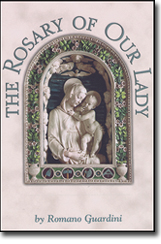
“Man needs a place of holy tranquillity that the breath of God prevades….This place is the inaccessibility of God Himself, which only Christ opens to man.

All prayer begins by man becoming silent – recollecting his scattered thoughts, feeling remorse at his trespasses, and directing his thoughts toward God.  If man does all this, this place is thrown open, not only as a domain of spiritual tranquillity and mental concentration, but as something that comes from God.

We are always in need of this place, especially when the convulsions of the times make clear something that has always existed but which is sometimes hidden…So we require more than ever this place of which we speak, not to creep into as a hiding place, but a s a place to find the core of things, to become calm and confident once more.” (Romano Guardini ROSARY OF OUR LADY.Ignatius Press)

New Passover

In 14 Book Corner on 2011/04/21 at 2:08 PM

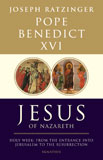
“…this farewell meal was not the old Passover, but the new one, which Jesus accomplished…It was Jesus’ Passover.  And in this sense he both did and did not celebrate the Passover: the old rituals could not be carried out when their time came.  Jesus had already died.  But he had given himself, and thus he had truly celebrated the Passover with them.  The old was not abolished; it was simply brought into its full meaning.”

Ratzinger, Joseph (Pope Benedict XVI) JESUS OF NAZARETH, Part Two. Ignatius Press.

Importance of a Preposition

In 14 Book Corner on 2011/04/21 at 2:00 PM

The preposition “for” has tremendous importance in the history of redemption.

“The Son…gave his life as a ransom FOR many.” (MK 10:45)

“Christ died FOR our sins in accordance with the Scriptures.” (I Cor. 15:3)

“For I received from the Lord what I also delivered to you, that the Lord Jesus on the night when he was betrayed took bread, 24 and when he had given thanks, he broke it, and said, “This is my body which is FOR you. Do this in remembrance of me.”  (I Cor.15:23-24)

“Recent theology has rightly underlined the use of the word “for” in all four (Gospel) accounts, a word that may be considered the key not on only for the Last Supper account, but to the figure of Jesus overall.  His entire being is expressed by the word “pro-existence” – he is there, not for himself, but for others.  This is not merely a dimension of his existence, but its innermost essence and its entirety.  His very being is a “being-for”.  If we are able to grasp this, then we have truly come close to the mystery of Jesus, and we have understood what discipleship is.”

Ratzinger, Joseph (Pope Benedict XVI) JESUS OF NAZARETH, Part Two. Ignatius Press.

Church Fathers

In 14 Book Corner on 2011/04/20 at 7:40 PM

THE TEACHING OF THE CHURCH FATHERS by John R. Willis, S. J. Foreword by Karl Keating.  Ignatius Press

If you want to know what the early Church Fathers had to say on theological questions, search no further.  This compact volume is arranged topically and logically.  Under each topic, you will find, in chronological order what each of the early Church Fathers had to say on that topic and with an attentive ear, you can hear each speak to you in his own words.

A former Congregational minister, John Willis became a Catholic in 1955 largely through reading the Fathers.  He  was the dean of the College of Arts and Sciences at Boston College and History professor.

Some of the Church Fathers quoted include: Ambrose, Athanasius, Augustine, Basil, Clement of Alexandria, Clement of Rome, Cyprian, Cyril of Alexandria, Cyril of Jerusalem, Eusebius of Caesarea, Gregory the Great, Gregory Nazianzen, Gregory of Nyssa, Hilary, Ignatius of Antioch, Ireneaus, Jerome, Chrysostom, Justin Martyr, Origen, Polycarp, Tertullian, Vincent of Lerins.

The major topics (containing numerous subdivisions)  are:

  1. Revealed Religion
  2. The Church
  3. Sacred Scripture and Tradition
  4. One God
  5. The Triune God
  6. Creation
  7. Sin
  8. Actual Grace
  9. Habitual Grace
  10. The Incarnate Word
  11. Mary, Mother of God and Virgin
  12. The Sacraments
  13. The Last Things
“The Fathers of the Church have been a vital source of wisdom and inspiration for countless saints, popes, peasants, and converts throughout the history of the Church. In this powerful one-volume library, Father Willis presents more than 250 selected doctrinal topics in an exhaustive selection of writings from the major sources of the Fathers. He lets the Fathers speak for themselves on a wide variety of spiritual themes.” Back cover comment
I have recommended this book to many Catholic women married to men of various Protestant denominations, and the wives have told me t the readings have been catalyst to worthwhile spiritual exchanges and comfort in an area of communications previously fraught with insecurity.

Booklet: YouTube Links to Latin Hymns

In 14 Book Corner on 2011/04/19 at 2:56 PM

1 YouTube – Renee Fleming sings “Panis Angelicus” by Cesar Franck              http://www.youtube.com/watch?v=1a11YheB2zM

2 YouTube – Mozart, AVE VERUM CORPUS, Sopran + Orgel

http://www.youtube.com/watch?v=fy1WpsVPMkk

3 YouTube – Eucharistic Prayer Of St Thomas Aquinas (“Pange Lingua Gloriosi Corporis Mysterium”.)

http://www.youtube.com/watch?v=N0HG41V9Vxc

4 YouTube – Adoro Te Devote

http://www.youtube.com/watch?v=WMK5MnZaoks

YouTube – Charlotte Church Ave Maria

  http://www.youtube.com/watch?v=n8g6Tqqc6DQ

6 YouTube – Salve Regina: Hail Holy Queen

http://www.youtube.com/watch?v=1B91RUv2lI8

7 YouTube – O Salutaris Hostia    The Salutaris is towards the end of the Adoration

  http://www.youtube.com/watch?v=Xx33NiZO8Lc

8 YouTube – Olivier Messiaen – O Sacrum Convivium / KosovaPhilharmonic Choir / Rafet Rudi, cond. / REMUSICA 2008

  http://www.youtube.com/watch?v=hVLsIIlbO-Y 

9 YouTube – Verdi Dies Irae Solti

  http://www.youtube.com/watch?v=pW1Uc-grcMs

10 YouTube – Gregorian Chant – “Dies Irae” AS WE SANG AT FUNERAL MASSES

http://www.youtube.com/watch?v=Dlr90NLDp-0

11 YouTube – Adestes Fideles – Pavarotti in Montreal Cathedral

http://www.youtube.com/watch?v=TbV3CrQ6Sa0

12 YouTube – Stabat Mater – Katia Riccarelli

http://www.youtube.com/watch?v=mNt13Vw-K6Q

Bishop Sheen’s Life of Christ

In 14 Book Corner on 2011/04/18 at 9:28 PM

LIFE OF CHRIST by Archbishop Fulton Sheen. Ignatius Press.

There are two version: one with 480 pages; another with 658 pages.  The longer one is recommended because it contains valuable materials for Catholics.

This book has been hailed as the most eloquent of Fulton Sheen’s writings.  It is the product of many years of prayer, daily devotions and scholarly research.  This brilliant scholar recounts all the major incidents in the life of Christ: not only in their historical content, but with deep and insightful comments on their theological significance and their practical application.  Christ is its constant focus and is shown as the Incarnate Son on God, prophet, teacher and healer who brought salvation into the world then and throughout the ages

“It was not so much that His birth cast a shadow on His life, and led to His death,” writes Sheen. “It was rather that the Cross was there from the beginning, and it cast its shadow backward to his birth.”

Bishop Sheen’s historical, philosophical and sagacious insights as well as his probing into the motives and hearts of a myriad of persons in the life of Christ present timeless lessons for the reader.

You will always be grateful for having read this book: a book which has also inspired countless others to live the inspirations gain from this great narrative of the Saviour and His motivating love for each person.

I have personally led several studies of the Life of Christ (for Catholics, Anglicans and Episcopalians), using the outstanding narrative presented by Bishop Sheen.  He has become a favorite of the participants, who treasure the book as a guide and a source: one to be read and re-read.


Sheen, Fulton LIFE OF CHRIST.  Ignatius Press.

http://www.ignatius.com/Products/LOC-P/life-of-christ.aspx

Modern Times Classics

In 14 Book Corner on 2011/04/17 at 12:08 AM

Tolstoy, Count Leo ANNA KARENINA (The tragic consequences of a woman's decision in 1870's Russia)


The Cypresses Believe in God: Spain on the Eve of Civil War

Gironella, Jose Maria THE CYPRESSES BELIEVE IN GOD ( Spain, during the period of the Republic, from 1931 to outbreak of the devastating Civil War, 1936)


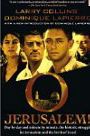
Collins and LaPierre O JERUSALEM (The gaining of independance of the State of Israel: the story of the Arab-Israeli struggle for possession of Jerusalem from 1948 to the Six Day War in 1967; a history of Israel as a nation with a discussion of the religious significance of the Holy City from both Moslem and Judaic perspectives.


One Day In The Life Of Ivan Denisovich

Solzenythsn, Alexander ONE DAY IN THE LIFE OF IVAN DENISOVICH (Struggle for life in a Stalinist labor camp)


Solzentisyn, Alexander THE GULAG ARCHIPELAGO (The pathetic life of inmates in the slave labor camps of the Stalin era)


Reformation Period Reading

In 14 Book Corner on 2011/04/17 at 12:07 AM

Benson, Robert Hugh COME RACK! COME ROPE! (Persecutions during Elizabethan times)

Edmund Campion

Waugh, Evelyn EDMUND CAMPION (Biography of St Edmund Campion, Elizabethan martyr)


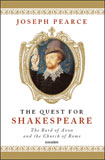
Pearce, Joseph THE QUEST FOR SHAKESPEARE (The historically correct facts about Shakespeare's life and writings)


Asquith, Clare SHADOWPLAY (The Catholic message in Shakespeare's works)