2cornucopias

Archive for the ‘13 History’ Category

St. Isidore to the Rescue

In 13 History on 2011/06/07 at 1:28 PM

Anti-Semitism lurks in every society: good or evil, Christian or pagan. Why? Because Satan will always hate the people God once chose for His very own.  The hatred of Christians for Jew and of Jews for Christians is one of Satan’s works.  It has destroyed men who could have have been saints and turned ordinary humans into monsters.

In late Visigothic Spain there was a persecution of the Jews.  St. Isidore of Seville warned Spain’s Catholic people against this spiritual disease when he saw it beginning to infect them.  At first they listened to him.

St. Isidore presided at the Fourth Council of Toledo in 633, prohibited the forced conversions of Jews and condemned the king for instigating such a procedure.  However, not even three years after Isidore’s death, a new king prohibited the public practice of Judaism.  Sadly, the bishops did not object.

By the time of the Twelfth Council of Toledo, the king instigated the proclamation of twenty-eight laws against the Jews.  To remain in Spain, Jews were required to be baptized. Circumcision was punished by castration.

Spain ignored Isidore.  The Moors invaded and occupied it for 700 years.

Phillip II of Spain expelled the Jews (Sephardic), who were the middle class. Interestingly, Spain lost her enormous empire and stagnated commercially until the descendants of the Jews he had expelled returned after Castro took over Cuba to where the Sephardic Jews had migrated.

History has shown that nations that persecute the Jews suffer unforeseen consequences. The Roman Empire destroyed Jerusalem and scattered the Jews (Diaspora).  Nazi Germany almost self-annihilated because of the Holocaust.

The Russian Czars inaugurated pogroms against the Jews and got Lenin, Stalin and 70 years of Communism.  Eastern Europe’s cruel treatment of the Jews gave them decades of oppression under Communism.

Actions have consequences; no doubt about it.  Some way, some day, payment is due.

Yassir Arafat told the women of Palestine to bear twelve sons, giving ten to the cause and keeping two for themselves.  The resulting increase in the birthrate in Palestine and elsewhere throughout the Moslem lands has led to a tremendous surplus of well-educated but unemployed young men who you have been seen on the daily news protesting in the streets of Tunisia, Egypt, Yemen, Bahrain and Syria. This is just the tip of the iceberg, and it could sink the Arab ship.

Beware Moslems!  As Santayana said: “Those who do not know history will be condemned to relive it.” The Jews are God’s chosen people, no doubt about it.  Heed St. Isidore.

Bellarmine and Galileo

In 13 History on 2011/05/18 at 8:06 AM

St. Robert Bellarmine was to Pius V what Cardinal Joseph Ratzinger was to Pope John Paul II: in charge of the Holy Office and chief theologian.

This renowned and distinguished Jesuit theologian, writer  and cardinal was brought up at the newly-founded Jesuit college and  entered the Society of Jesus.

Having studied philosophy at the Roman College, he later taught humanities at Florence, and theology at Padua before going to Louvain to become acquainted with the character of the currents of heresies.

His reputation both as a professor and a preacher  drew both Catholics and Protestants from all Christendom.

Later, holding the chair of Controversies at the Roman College, Bellarmine’s powerful lectures grew into the work OF CONTROVERSIES which won him great renown.  His book has never been superseded as the classical book on its subject matter.

His monumental work was the first attempt to systematize the controversies of the time, and made an powerful impression throughout Europe. It dealt such a severe blow to Protestantism that in Germany and England special chairs were founded in order to provide replies to it.

One major controversy he settled was that concerning the nature of the concord between efficacious grace and human liberty.

Bellarmine also sat on the final commission for the revision of the Vulgate text of the Bible which was ordered by the Council of Trent.

From his post as Rector of the Roman College he was called in 1597 by Pope Clement VIII to be his personal theologian as well as Examiner of Bishops and Consulter of the Holy Office. When made a Cardinal, it was said of him that “the Church of God had not his equal in learning”.

In 1615  Bellarmine took part in the earlier stages of the Galileo case but had died before it reached its later more serious stages. Bellarmine had always shown great interest in the Galileo’s discoveries  and frequently corresponded in friendship with him.

The Jesuit, Christopher Clavius, the greatest mathematician of the times and maker of the Gregorian Calendar had written to Galileo that Jesuit astronomers had confirmed his discover with the new telescopes and urged Gailele to go to Rome and promote them.  Fr. Clavius assured  Cardinal Bellarmine that the discoveries were real and confirmed by some telescopic observations of his own.

Caccini, a Dominican, maintained that Joshua’s command to the sun could not have been done according to the Copernican theory! The reality was that he and his followers were unprepared to recognize that a universe generally governed by physical laws could still accommodate miracles due to the direct action of God (they limited God by their own standards).

The sun standing still at Joshua’s command was not an action that can be explained by natural laws and did not need to be so explained.  The miracle could not be seen as disproving a theory about those laws.  God can override His laws when it serves His purposes (miracles of Christ).  He could make the sun stand still in the sky for Joshua just as he made the sun dance and drop in the sky over Fatima in 1917.

The judicious Cardinal Bellarmine wrote that the Copernican theory might be true, but was not yet proved, and should not be applied to the interpretation of Scripture until it was proved.  This position justly accommodated both sides of the Galilean controversy.

Cardinal Bellarmine had said it might eventually be proven true. He consistently favored teaching it as a theory, because he knew it might turn out to be true, though not yet proven.

Galileo was a very good Catholic.  He submitted at once, had a forty-five  minute audience with the pope who assured him of his continued admiration and support.

Galileo produced Cardinal Bellarmine’s affidavit that he, Galilieo at his first deposition before the Inquisition had not been required to abjure any false doctrine and had not been given any penance.  He did not mention  any prohibition against teaching the Copernican theory as an hypothesis.

Unfortunately, by this time Bellarmine was dead.  The committee deemed the affidavit was irrelevant and gave the verdict that he was “vehemently suspected of heresy”.

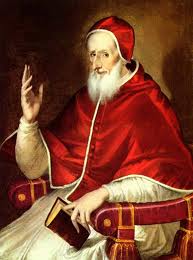
Pope St. Pius V 1540-1572

In 13 History on 2011/05/12 at 10:23 PM

Pope St. Pius V was a history-making pope and one of the giants of the whole history of the Western world.  He is called the Father of the Catholic Reformation and savior of Christendom.


In 1556, a Dominican monk, Antonio Ghisliere, who prayed the rosary daily, was chosen pope in 1556 in a unanimous roll call vote because of his passionate devotion to Christ, the Church, his iron courage, relentless perseverance and spotless reputation. He begged not to be chosen but the whole Church joyfully celebrated his selection.  


Son of a poor muleteer, he was destined to follow in his father’s footsteps had not the Dominicans given him a good religious and secular education. A professor of philosophy and theology, he also held various positions of authority in his community.  He was a living example of monastic virtues and the spirit of his order’s founder, St. Dominic.


In 1556 he was made bishop. His zeal against heresy led him to be chosen to be an inquisitor of the faith in Italy and later for all Christendom.

He began his pontificate by giving large alms to the poor. As pontiff he practiced the virtues he had is displayed as a monk and a bishop. A simple man, he only owned two coarse woolen shirts and dined on and egg and a few vegetables. Daily, he made two meditations on his knees in the presence of the Blessed Sacrament.  In his 7 years as pope, he visited the hospitals and sat by the bedside of the sick, consoling them and preparing them to die. He washed the feet of the poor and embraced the lepers. An English nobleman was said to convert on seeing him kiss the feet of a beggar covered with ulcers.


He addressed the cardinals exhorting them to reform themselves and their households and avoid the kind of life that had given so much scandal in the past to the humble members of the church.    

He declared that he intended to carry out the decrees of the council of Trent to the letter. He banished luxury from his


court, raised the standard of morality, labored with his intimate friend, St. Charles Borromeo, to reform the clergy,    


obliging his bishops to reside in their dioceses and the cardinals to lead lives of simplicity and piety. 


He appointed Borromeo as the head of a special commission or the reform of the clergy as he had already done so in Milan.  Consequently, a cardinal who had left the church and married, was thrown out and six heretical bishops were removed, as well as one bishop who stormed out on Christmas day, denouncing the pope, throwing down his mire and staff and stormed out of the church, mounting a horse and riding away to join a Calvinist army.  Also, a whole religious order was also suppressed.


Pope Pius also ordered that the catechism of the Council of Trent be published, and it was done within a year. St. Peter Canisius, a German Jesuit, immediately made the German translation.  Soon it appeared in Polish, French, and other languages


Right at the beginning of his pontificate, he had the new General of the Jesuits, St. Francis Borgia,  set to work on a general history of the church to refute the distorted Protestant history circulating. With the indispensable aid of the Jesuits

and many others, the pope began the reform of the Church, or as it is called, the Catholic Reformation, a gigantic  

undertaking that would require more than a full generation to complete.


Pope St. Pius took all the words and examples of Christ literally.  The famous Protestant historiographer, Ludwig Von Pastor wrote that everyone who met him “felt that he was in the presence of a man of unshakable firmness and of a profound seriousness, which, far removed from anything in this world, was fixed entirely on spiritual things.”  


Not only did he reform the religious orders, but he had imprisoned bishops who refused to live in their dioceses, insisted on regular Sunday religious instruction, regular attendance by children to instructions, establishment of seminaries, ordered bishops to visit their parishes and make regular visits to Rome. In 1570, he approved of a common liturgy and missal.  


During this period of tremendous religious and political upheaval, the Church was fortunate to have this powerful and persuasive leader.  In Germany he supported the Catholics oppressed by the heretical princes; in France he encouraged the League by his counsels and with financial aid; in the Low Countries he supported Spain. The Pope often said that Philip II of Spain was the only king upon whom the Church could consistently depend.  


He eventually excommunicated Elizabeth of England and supported the cause of her imprisoned cousin, Mary Stuart, Queen of Scots, writing her in prison to console her.  

Philip II sent the  Spanish Armada to capture Elizabeth and replace her with the legitimate descendant of Henry VII. 


The two great and constant worries for him were the struggle against the Protestants and the Ottoman Turks.  He constantly tried to unite the princes of Christendom against their hereditary enemy, who sought to destroy Christendom.  


In 1570 Suleiman attacked Cyprus threatening all Christendom, he did unite the forces of Spain and Venice.  Don John of Austria, the commander-in-chief of the expedition, had in his flagship a replica of Our Lady of Guadalupe.  


On the day of the Battle of Lepanto, October 7, 1571, the pope was working with the cardinals, when, suddenly, interrupting his work opening the window and looking at the sky, he cried out: “A truce to business; our great task at present is to thank God for the victory which He has just given the Christian army”.


When eventually the new of the victory arrived, the Pope burst into tears.  LEPANTO’s fame has echoed down the centuries as a magnificent victory over the Muslims, a battle which dealt the Turkish power a blow from which it did not recover until modern times.  Cervantes, author of Don Quijote, fought in this battle and said that it was: “the greatest

day’s work seen in centuries.”


Having requested all Christendom to pray the rosary during the battle, this devout son of St. Dominic, consequently instituted the feast of the Rosary to be celebrated the first Sunday of October in honor of Mary, “Help of Christians.”


This simple, devout and Christlike pope is remembered for his rare virtue and an unfailing and inflexible integrity.  

Note: See post 9/11 in Category: History and post Bagels, Croissants, Capuchino and Shish-kebobs in Category: Historical Tid-bits.

Garden of Olives

In 13 History on 2011/05/09 at 6:21 PM

During the Jewish Wars which culminated in the destruction of Jerusalem in 70 AD,  Titus cut down all the trees in Jerusalem and the surrounding areas.

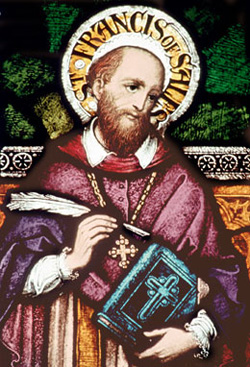
St. Francis De Sales (1567- 1622)

In 13 History on 2011/05/09 at 9:54 AM

Francis belonged to an aristocratic family. He learned rhetoric and humanities from the  Jesuits.  Originally a  lawyer, Francis followed God’s call.

Pope Clement prophetically said to Francis: “Drink, my son from your cistern, and from your living wellspring; may your waters issue forth, and may they become public fountains where the world may quench its thirst.”

In 1594 he volunteered to evangelize in Geneva where the Reformed Faith had been imposed. Risking his life, he journeyed through the canton, preaching constantly and by his zeal, learning, kindness and holiness people responded. He confuted the preachers sent by Geneva to oppose him; he converted prominent Calvinists. Read the rest of this entry »

Compatiblility of Skepticism and Faith

In 13 History on 2011/05/07 at 8:31 AM

A historian is trained to be a skeptic in the sense that he does not presume that what other historians have written is necessarily true. He needs to ferret out biases and mere opinion.   The historian searches for what really happened.  What works for one discipline does not necessarily work for another. Read the rest of this entry »

Political Nursery Rhymes

In 13 History on 2011/04/19 at 6:34 PM

Many nursery rhymes have secret or hidden meanings that allude to people and events in history.  When oral criticism meant death, it was wiser to use cunning.

1.Plantagenet king Richard the Lion-Hearted went on the Third Crusade and while he was gone, his brother, John Lack-land had to give in to the nobles and sign Magna Carta, losing the absolute right of the king, which Richard was never able to recover.

  • Humpty Dumpty sat on a wall.
  • Humpty Dumpty had a great fall.
  • All the king’s horses and all the king’s men
  • Couldn’t put Humpty together again!

2. During the days of England’s first civil war, the War of the Roses (Red Rose of Lancaster vs White Rose of York), the aspirant to the throne failed in his campaign.

  • The Noble Duke of York he had ten thousand men
  • He marched them up to the top of the hill
  • And he marched them down again.
  • When they were up, they were up
  • And when they were down, they were down
  • And when they were only halfway up
  • They were neither up nor down.
3. (In the days of Tudor King Henry VIII, see the rhyme: “Sing a Song of Sixpence” which is in this same category on this blog.)
4. London Bridge was on the verge of collapse from the hundreds that Henry VIII had executed.  The most common method of execution was to be hung, drawn and quartered.  The heads were impaled on the two spikes at each end of the bridge.  Hands and feet were sent to neighboring towns as a frightening warning sign.
  • London Bridge is falling down,
  • Falling down, Falling down.
  • London Bridge is falling down,
  • My fair lady.
  • Take a key and lock her up,
  • Lock her up, Lock her up.
  • Take a key and lock her up,
  • My fair lady.
  • How will we build it up,
  • Build it up, Build it up?
  • How will we build it up,
  • My fair lady?

5.Mary Tudor  (only surviving child of Henry and Catherine of Aragon)

  • Mary, Mary, quite contrary,
  • How does your garden grow?
  • with silver bells and cockleshells,
  • and pretty maids all in a row.

During the reign of Mary’s half-brother, Edward VI, his uncle Seymour and Archbishop Cranmer introduced Calvinist ideas to the Catholic Church of England as termed so by Henry VIII, who died a professing Catholic and left his treasury for Masses to be said for his soul.  It is during this period that the Book of Common Prayer became the new format for the new religion: Anglicanism.

When Mary Tudor became Queen of England, she and her husband, Philip II of Spain, re-instated the English Catholic Church by putting it into communion with the Rome.

The silver bells refer to the bells rung at the Consecration of the Mass to call the attention of the congregation to the Transubstantiation taking place which Cranmer had deemed repugnant. (Article XXVIII Book of Common Prayer).

The pretty maids in a row refers to the fact that consecrated religious women wore the same habits.

6. The Cat and the Fiddle refers to Queen Elizabeth who was nicknamed ‘The Cat’ because of the way she played or fiddled with her cabinet members, much like a cat  plays with mice.

  • Hey, diddle, diddle!
  • The cat and the fiddle,
  • The cow jumped over the moon;
  • The little dog laughed
  • To see such sport.
  • And the dish ran off with the spoon. 

The dish represents Elizabeth’s serving lady,  and the spoon alludes to the royal taster. These two servants fell in love and secretly eloped,  running away from the court. When they were captured, Elizabeth had them thrown into the Tower of London.

7.  King James VI of Scotland inherited the throne after Elizabeth.  The Stuart Kings of Scotland did not have the personal charm of the Tudors, lacked money, and their parliament was composed of Tudor Kings’ men, and so were always in financial trouble.

(Lean = $);  (Fat = tax)  so Jack Sprat (a person of low stature) dissolved Parliament

  • Jack Sprat could eat no fat
  • His wife could eat no lean
  • And so betwixt the two of them
  • They licked the platter clean
  • Jack ate all the lean,
  • Joan ate all the fat.
  • The bone they picked it clean,
  • Then gave it to the cat
  • Jack Sprat was wheeling,
  • His wife by the ditch.
  • The barrow turned over,
  • And in she did pitch.

8. Jack be nimble applies to the failure of  Stuart monarchs to keep the throne.

  • “Jack, be nimble, Jack, be quick,
  • Jack, jump over the candlestick.Jack jumped high,
  • Jack jumped low,
  • Jack jumped over and burned his toe.”

9.  With the closing of the monasteries and the granting of lands by the Tudors to make King’s Men, much of the arable land was enclosed (Enclosure Movement)  and turned into grazing land for sheep.  Former farmers now became wool carders, spinners and weavers, living in decrepit cottages outside the fenced areas.

  • Baa, baa, black sheep,
  • Have you any wool?
  • Yes sir, yes sir,
  • Three bags full;
  • One for the master,
  • And one for the dame,
  • And one for the little boy
  • Who lives down the lane.

10.  With no monasteries to take care of the poor, the poor houses filled (Bedlam was one such) or many went to the colonies as indentured servants.

  • There was an old woman who lived in a shoe.
  • She had so many children, she didn’t know what to do.
  • She gave them some broth,
  • Without any bread,
  • Whipped them all soundly, and sent them to bed.

11. After the Stuarts came the Hanoverian kings who were Germans.  George I never learned English, and his son barely could utter a few words.  Both left the governing to Parliament.  However, George III decided he would be an absolute king like the French Louis .  He tried it on the girls (colonies) and lost.

  • Georgie Porgie, puddin’ and pie,
  • Kissed the girls and made them cry.
  • When the boys came out to play,
  • Georgie Porgie ran away.
So, now you know  that what you thought were cute rhymes to entertain children, were really the ancestors of e-mail, Twitter, Facebook, etc………

Sing a Song of Six-pence

In 13 History on 2011/04/19 at 5:48 PM

Many nursery rhymes have secret or hidden meanings that allude to people and events in history.  Since Tudor Henry VIII developed a habit of executing those who opposed him, it is not surprising that in the e-mail of their times, messages got sent in rhyming code.

  • Sing a song of sixpence,
  • A pocket full of rye;
  • four and twenty blackbirds Baked in a pie.
  • When the pie was opened,
  • They all began to sing.
  • Now, wasn’t that a dainty dish
  • To set before the King?

We owe: “Sing a Song of Sixpence” to the rhythmic comment on his confiscation of the monasteries and his marital woes.  Sixpence refers to monetary coin. Henry needed money, and so he began confiscating the property of the Catholic Church.   The Church was often given land and goods by generous nobles who wished to see the poor and indigent cared for.  It was to the monasteries that the needy went for help.  The monastery roofs were made of lead and Henry needed the lead for ammunition. The twenty Blackbirds refers to the bishops and abbots of monasteries he had executed.  The song of the blackbirds were the martyr’s affirmation of their trust in God and hymn of praise to God.  With the burning of the monasteries, the poor were left to shift for themselves, and often ended in prisons until deported to Australia.  The State did not replace the monasteries in the proper care for the poor.

  • Sing a song of sixpence,
  • A pocket full of rye;
  • four and twenty blackbirds Baked in a pie.
  • When the pie was opened,
  • They all began to sing.
  • Now, wasn’t that a dainty dish
  • To set before the King?

Henry VIII was in his treasury counting the financial gains from his confiscations.  The Queen, his wife, was Catherine of Aragon, whose dowry was the greatest in history because her parents were Ferdinand and Isabella of Spain, whose galleons came filled with gold from the New World.  Bread and honey symbolized her wealth.

  • The King was in his countinghouse,
  • Counting out his money;
  • The Queen was in the parlor
  • Eating bread and honey.
  • The maid was in the garden,
  • Hanging out the clothes.
  • Along there came a big black bird
  • And snipped off her nose!

The maid in the garden was Anne Boleyn, a lady-in-waiting, whose beauty had caught the king’s lustful eye.  However, when he divorced Catherine and married Anne, she bore him Elizabeth rather than the male child he wanted,  so he had Anne beheaded.  The big black bird was the name for the royal executioner.

  •  The King was in his countinghouse,
  • Counting out his money;
  • The Queen was in the parlor
  • Eating bread and honey.
  • The maid was in the garden,
  • Hanging out the clothes.
  • Along there came a big black bird
  • And snipped off her nose!

Some interesting sidelines:

Henry’s father, Henry Tudor, was a commoner, who had no claim to the throne except that he married a woman who was 28th in line for the throne.  After the chaos of the War of the Roses and the Hundred Years ‘ War, England wanted peace, and Henry Tudor assumed power and promised not only peace but also, no taxes.

Henry Tudor had three children: The oldest, Arthur (named for the legendary King Arthur), was betrothed as a child to Catherine of Aragon who was a few years older.  The second, Henry, was sent to a monastery, where he received a thorough education and was an outstanding scholar.  If Lorenzo de magnificent of Florence could have a son a pope (Pope Leo X), Henry Tudor decided his Henry would be a pope also.  The third child was a beautiful girl, Margaret, whom he married off to James of Scotland in order to make an ally of the King of Scotland and not the powerful nuisance the Scots had been to England.

The fly in the ointment was that little Arthur upped and died.  Henry Tudor removed his son, Henry, from the monastery and sought the Pope’s permission to have little Henry marry his brother’s widow, since the marriage had not been consummated.  The Pope said there was no problem because it was not a matter of consanguinity.

When Henry came out of the monastery, he discovered the female world and immediately fathered the first of many out-of-wedlock sons.  His first was the famous Duke of Monmouth.  By the time Henry married Catherine, he had already contracted syphilis.  He was the first famous syphilitic in history.  Syphilis was a “gift of the new world” in exchange for the “old world’s” smallpox.  Neither world had the necessary immunity and both diseases were catastrophic.  Catherine bore him numerous children who were either still-born or died shortly after birth.  The one exception was Mary Tudor.

When Henry wanted to marry Anne Boleyn and the Pope could not grant him a divorce because the 17 year marriage with Catherine was valid, Henry objected on the grounds that it was not lawful to marry his brother’s widow and that he had no living children as a punishment by God.  As to the consanguinity matter, this hypocrisy was known to all since he had a real issue of consanguinity with Anne Boleyn having seduced her sister and left her with child.  That is why Anne Boleyn would not consent to be his mistress but demanded marriage.

Henry begged Catherine of Aragon on her deathbed to forgive him, telling her he had always loved her.  She had already forgiven him and had loved him despite his tragic flaw.

Anne Boleyn was hated by the common people of England, due to her haughty manner and the common folk’s strong allegiance to Henry VIII’s first wife, Catherine of Aragon.

Open criticism of Anne was approved and encouraged by Henry after he had Anne beheaded.

Later, after the reign of  Edward VI and Mary Tudor, when Queen Elizabeth I ascended to the throne all such approval and criticism stopped because the new Queen was the daughter of Henry VIII and Anne Boleyn.

Another ditty: Six wives did Henry have: 2 divorced, 2 beheaded, 1 died & 1 survived.…

Elizabeth had been presented to all her father’s new wives.  To the last one she said: ”Oh, my lady, I do hope you will last longer than the last one!” That Queen did survive by bending over to kiss the dying king and removing from his hand the order for her execution, which she tucked into her voluminous sleeve. She strutted out of the royal chamber whistling a saucy tune, taking the courtiers’ attention away from Henry and focusing it on her scandalous behavior.

Tips for Teachers

In 13 History on 2011/04/11 at 5:51 PM
When I began my 36-year teaching career in  a veteran teacher gave me some valuable advice: “Never do anything that you can get someone else to do for you.”  My students were thrilled when they were asked to do whatever. That freed me to do what they could not do.
On the first day of school, you should be able to spot the potential trouble makers.  Assign them seats all along the first row so that you can keep your eyes on them.  Then, assign them tasks.  This will make them feel important.  Give the student a fancy title like “Diplomatic Courier,” and that student will be in seventh heaven carrying a note from here to there.

Royal Triplets?

In 13 History on 2011/04/11 at 3:49 PM

If you ever have the opportunity to visit the Royal Palace in Madrid, Spain, note that in the former bedroom of Queen Victoria Eugenie, granddaughter of Queen Victoria, there is a unique photograph.  It depicts three young men, all in British naval uniforms, and signed Willie, Nicky, Georgie.

Looking at the three young men, you would think they were identical triplets.  All were grandsons of Queen Victoria: Willie became known as Kaiser Wilhelm II of the German Empire; Nicky, as Czar Nicholas II of Russia; and Georgie, as King George V of the England.  Queen Victoria died in the arms of Willie.

After the death of Grandmother Victoria, tragically for the world the antipathy that developed between the three rulers caused some historians to see World War I as a civil war between descendents of Queen Victoria.