2cornucopias

Archive for the ‘07 Observations’ Category

Protect Your Children in this Electronic Age

In 07 Observations on 2013/11/06 at 12:00 AM

 (Romereports.com) How safe are children on the web? What social networks are safe to use and why? How can they make the most of the electronic devices they use? The U.S Conference of Catholic Bishops has teamed up with the Greek OrthodoxArchdiocese of America to launch ‘Faith and Safety‘, a new website to help parents keep their kids safe on the web.

The site is full of tips on how to secure devices and networks, but it also features thought provoking advice. Social networks and websites are reviewed one by one and their use is recommended on an age based scale. Facebook, for example, is suggested for 13 year olds or older.

The website even grades the presence of sexual content, violence and consumerism.  ‘Faith and Safety’ also reviews cellphones that are made especially for kids that can block unwanted calls, set time limits for phone usage and those that allow parents to find their children through a GPS system.

Another interesting feature is a section that reviews apps. For each of them, an ideal age is recommended. It grades the overall quality and educational potential.

‘Faith and Safety’ is constantly updated. Its blog alone has thousands of views and among its contributors, there’s American Bishop John Wester, of Salt Lake City.

Appeared in ROME REPORTS TV NEWS AGENCY

Day of the Unborn Child Passed by Lawmakers

In 07 Observations on 2013/09/26 at 12:00 AM

 
Lawmankers said the South-American country’s pro-life constitution inspired the law, which celebrates the unborn child’s right to life and adoption.
– Petr Kratochvil

SANTIAGO, Chile — The Chilean House of Representatives has approved a new law with a vote of 59-27 that establishes March 25 as the “Day of the Unborn Child and of Adoption.”

Although the proposal was granted initial approval on May 14, the congressional Human Rights Committee then introduced a modification to instead call it the “Day for Pregnant Women and Adoption.” The request was declared inadmissible by the president of the House of Representatives.

Sen. Jaime Orpis of the Independent Democratic Union party sponsored the measure to set aside March 25 as the day to honor the unborn and adoption in Chile. Orpis said the idea was to protect human life from the moment of conception. The day coincides with the Catholic Church’s annual liturgical celebration of the Annunciation, when Jesus Christ was miraculously conceived in the womb of the Virgin Mary.

Rep. Jorge Sabag of the Christian Democratic Party said the law “is nothing more than the consequence of Article 19 of the constitution of the republic, which guarantees the right to life for all persons and that the law shall protect the life of the unborn.”

The law points to other countries that also remember the unborn on March 25 in order to highlight the value of life, to condemn attacks against defenseless human beings and to promote the reversal of laws that enshrine abortion.

The law states, “To protect the life of the unborn is to recognize the right to life of every human being, even against the will of their own progenitors. In this way, no one can dispose of the life of another.”

National Catholic Register 9/12-13

Introducing Fisher More College: A Truly Traditional Catholic Education

In 07 Observations on 2013/09/12 at 12:00 AM

The following post is by Jason Fabaz of Fisher More College:

“The proper and immediate end of Christian education is to cooperate with divine grace in forming the true and perfect Christian…” – Pope Pius XI, Divini Illius Magistri
“There are three things which we desire all the Fellows of this College to care for above all things, namely, the worship of God, the increase of the faith, and the probity of morals.” (From the Statutes of St. John’s College, Cambridge University, England, written by St. John Fisher, Chancellor, 1516)
At Fisher More College we have been long-time followers of Rorate Caeli and applaud the contributors for their great work!  What unites almost everyone who posts here is a love for the Traditional Mass and the Traditional Doctrines of Holy Mother Church.  With that in view, we would like to share with you a little about a College that is completely committed to promoting the Traditional Mass, Traditional Doctrines and Traditional Catholic Formation and Education.
We’d like to present to you America’s only fully-accredited 4-year Catholic College that proclaims fidelity to the Traditional Latin Mass as essential towards achieving its mission: The College of Sts. John Fisher & Thomas More (Fisher More College).
Our Goal is that every Traditional Catholic, regardless of where they attend the Traditional Latin Mass (Fraternity, Institute, Society, Diocesan sponsored, etc.) will learn about Fisher More College and recognize that we are a Catholic College that lives by the motto: Lex Orandi, Lex Credendi, Lex Vivendi (as we pray, so we believe, so we live) which we have adopted as Our Statement of Principles:
 
Lex Orandi: We pray the Traditional Latin Mass and the associated rich Sacred Liturgy that has been passed down to us through the ages. We are certain that fidelity to the Usus Antiquior is essential to achieving our mission.
 
Lex Credendi: We believe in the Holy Catholic Church, Her teachings, and Her traditions. We hold that this belief has been the greatest source of enrichment of faith, piety, and culture throughout all times.
 
Lex Vivendi: We live an apostolate of faith, service, and scholarship. We strive for holiness in forms that correspond to our three great moral duties toward God: to know Him, to love Him, and to serve Him.
Fisher More’s curriculum is rooted in the Catholic scholastic and Thomistic tradition. Required texts include the works of Plato, Aristotle, St. Augustine, St. Thomas Aquinas, and many other great works of the Western intellectual tradition.  The program will produce graduates who are skilled in the arts of reading, writing, and thinking, who understand the purpose of life and the meaning of a vocation, and who possesses the will and character to live an excellent life.
Importantly, Fisher More is committed to providing Catholic education that is affordable for large families.  It doesn’t participate in any government or private student loan programs.  For full-time students living on campus, the cost of attending the residential College for the 2013-2014 school year is $5,000 per semester, $10,000 per year.  This amount is all inclusive of tuition, room, meals, and fees.  Those familiar with the prices of the old-line Catholic universities will recognize the bargain at Fisher More.  It is even less expensive than most tax supported state universities.
We recently mailed our first-ever national fundraising letter, we call it our Rogatio Letter which has been distributed to over 10,000 people devoted to the Traditional Latin Mass. The letter was written on Thursday, August 22, 2013, the glorious feast of the Immaculate Heart of Mary. On that same day, the College was consecrated to Our Lady’s Immaculate Heart. I invite you to click on the following link to visit our website and read our Rogatio Letter in its entirety.
Also, to read a collection of statements that describe the College’s apostolate and answers important questions, please click here: Statement of the Apostolate
Fisher More needs the support of Traditional Catholics in the U.S. and abroad in order to achieve its mission.  We hope you will consider actively supporting the advancement of the College and help promote awareness of this Catholic endeavor.
For more information or to join our mailing list to receive future communications from us, please contact: 
Jason Fabaz
Director of Development and Institutional Advancement

Reprinted with permission:  National Catholic Review 9/8/13

Go to National Catholic Review 9/8/13 for a list of all faithful Catholic Colleges.

“Wholeness of Vision” on Abortion by Thomas J. Ashcraft

In 07 Observations on 2013/08/01 at 12:00 AM

It will take more than windbag senators and coy judicial nominees to determine what the settled law on abortion should be.  A just answer will only be found by listening to people who have passed through this life and learned how to deal wisely with pregnancy when it arrives as unwelcome news.

Sheldon Vanauken (1914-1996) taught history and literature for years at Lynchburg College in Virginia.  He is best known for his book “A Severe Mercy,” first published in 1977 and still in print.

It tells the story of Vanauken’s love for his wife Jean Davis, known as Davy, their experience together at Oxford University where they became friends of C.S. Lewis, their conversion to Christianity, and Davy’s early death from a mysterious liver ailment in 1955.  A lyrical and deeply touching book, it is impossible to read with dry eyes.

Although full of details about the couple and their life together, “A Severe Mercy” omitted a major event from Davy’s youth.  Vanauken related it in a 1990 article entitled “Discovery:  Finding that Long-Lost Someone,” published by the New Oxford Review where he served as a contributing editor (www.newoxfordreview.org).

Two years after the death of her minister father when she was 14 years old, Davy, as Vanauken tells it, “running a bit wild . . . found herself pregnant.  There was nothing to do but tell her mother, who, along with her older sister, stood by her.  All this, of course, is an old, old tale among womankind.”

Davy had the baby, whom she called “Marion” and always remembered as blue-eyed and beautiful, and gave her up for adoption.  Davy was then “sent to a good prep school for girls.”  During her marriage to Vanauken, “Davy continued to remember her daughter with love, her daughter growing up — somewhere.”

After Davy’s death and the publication of “A Severe Mercy,” Vanauken wondered about “little lost Marion” and how much she would learn about her mother by reading the book.  He began to search for her but encountered the usual hurdles in the adoption world.

In 1988, however, the adoption agency finally consented to tell “Marion” (her adoptive parents had given her a different name) of Vanauken and his book about Davy.  While Vanauken was trying to decide how to contact Marion, Marion dialed him up on the phone “wild with excitement.”

“Found at last,” Marion later wrote.  “Incredible, choking joy!  Thanksgiving.  Yet sadness also — sadness that I could not touch her, hold her, and be held.”

On “A Severe Mercy,” Marion wrote to Vanauken: “At once thrilling and scary!  My heart pounding.  Almost breathless with discovery, unable to sleep till I’d read every word.  Excited beyond belief, sobbing, my pillow wet with tears.  Seeing my mother as a young woman loving the things I loved — beauty, dogs, sails in the wind, music.  I had been starving for this — and now the book.  I loved her love for you and your sharing and the incredibly wise things you did to protect your love.  And the piercing beauty of Christ coming into your lives.”

After high school Marion had become a nurse.  She later met and married a physician.  They had three children and lived in the San Francisco area.  One daughter had Davy’s smile.    Having experienced the loss of his wife and discovering much later his wife’s grown daughter and her own family, Vanauken acquired a unique understanding of what is meant by those asserting the “right to choose.”

“To see abortion right-side-up I must see,” he wrote, “not only the frightened 14-year-old Davy with a likely candidate for abortion in her belly but also the warmly alive Marion and her family.  This has been shown to me.  Having seen, how could I now say: ‘What a pity she couldn’t have an abortion in those benighted days!’

“To kill Marion now would be unthinkable, but it was Marion — no one else — when Davy was 14 and scared.  I can sympathetically feel for Davy then, but I know Marion and her children, too.  Surely both must be known or imagined for wholeness of vision.”

Vanauken concluded:  “John Donne, hearing the tolling of the passing bell, recognized that the bell tolled for him, for the death of any man diminished him.  Davy had only the poignant memory of the little lost Marion, yet she would have been diminished if abortion had deprived her of that memory. . . .   It seems to me that just this one abortion would have left a hole in Creation.”

And what of 33 years of Roe v. Wade?

__________________________________

Tom Ashcraft is a Charlotte lawyer.  

Published, The Charlotte Observer [www.charlotteobserver.com], 1-21-06

“Epiphanies of beauty”

In 07 Observations on 2013/07/12 at 12:00 AM

Holy Wood Acting Studio holds its Grand opening Event on March 25, 2011 and an extensive course begins on March 28, 2011

We need Christians to respond to the call of Christ the Divine Artist and take their place in creating new “epiphanies’ of beauty”; people who can help others to do the same by pursuing the vocation of the arts. I am thrilled to report on a new venture which is taking this task to heart by training future actors. The leaders of this effort, rather than retreat from Hollywood, have set up a new studio right in its heart. It is called Holy Wood Acting Studio.

A class discussion at Holy Wood Acting Studio

A class discussion at Holy Wood Acting Studio

LOS ANGELES, CA. (Catholic Online) – The relationship between the theatre and the Christian mission has been a bumpy road. Some of the early fathers, like St. John Chrysostom in his homilies on St Matthew and Tertullian in his admonitions against the shows, deterred the Christians from attending. This was because the theatre of the time extolled destructive behavior and denigrated the human person.  This does not mean that the theatre, or any art form, was rejected by the Church. In fact, history is filled with the Christian contribution to all of the Arts.

In the First Christian Millennium, the environment into which the nascent Christian Church was sent revealed an expression of theatre which had devolved to a sad low because human culture had become debased. No longer recognizing the beauty of creation and the dignity of the human person the culture reveled in sexual debauchery. It was because of this that early Christian leaders discouraged participation in the theatre. Unfortunately, hostility between Christians and the theatre continued into the third and fourth centuries and much theatrical presentation mocked the Christian rites and the Christian message.

The Christian faith proclaims that in the Incarnation of Jesus Christ the transformation of the entirety of all human experience and the created order has already begun. The early Christian community knew the goodness of life affirming theatre and artistic expression. The early Fathers understood the capacity of the Gospel to humanize men and women – and through them replace debased “art” with true beauty. The fullness of liturgical expression and the works of art produced by the early Christians demonstrate this fact. So, the Christians did what Christians are called to do, they transformed the culture from within and the arts flourished.

As for the Second Christian millennium, the first half of the Millennium witnessed a mature flowering of a Christian worldview with developments in art and Christian participation. However, in the aftermath of the so-called “Enlightenment” and the reactions to its aftereffects in some segments of the Protestant reformation, another season of suspicion arose concerning Christian participation in the arts. The theatre was again seen as suspect and discouraged in some Christian circles. It was considered “corrupt” and either abandoned or minimized as to its importance.  A sad and limited view of both man and the world created for him by God the Divine Artist followed.

As we began the Third Millennium, a Playwright, Actor and Artist occupied the Chair of Peter. In his 1999  “Letter to Artists” the venerable John Paul set forth an ambitious call for the participation of artists in the renewal of humanity through the flourishing of a new Christian humanism. With prophetic clarity he wrote of the “artistic vocation” as one who carried it in his own heart and incarnated it in his numerous plays and other writings.

Recognizing this between art and Christian mission he reminded us that Christianity is a true humanism, revealing the fullness of the human person re-created in the Lord who became like us so that we could become like Him. However, the Pope wrote that  “. in the modern era, alongside this Christian humanism which has continued to produce important works of culture and art, another kind of humanism, marked by the absence of God and often by opposition to God, has gradually asserted itself. Such an atmosphere has sometimes led to a separation of the world of art and the world of faith.”

That separation between the arts and a living faith has no place in a mature Christian worldview. It proceeds from a poor anthropology, a misunderstanding of the nature of man/woman. It represents an inadequate understanding of the scope and implications of the Incarnation of Jesus Christ. Finally, it promotes a theology of the Church and her mission that views “the world” as a hostile environment from which the Christian and the Church must recoil rather than a palate worthy of loving transformation by those who carry on the redemptive mission of Christ the Divine Artist.

Creation and Redemption are the grand masterpiece of God, the Divine Artist. He created the world out of love – as a manifestation of His Beauty. It is important in our time to reflect on what this relationship can become as we face an imploding Western culture. There is a connection between beauty and the arts and the Christian vocation to manifest the presence of the living God in this world which He still loves.

To be fully Christian is to be fully human. In this “Letter to Artists” the Venerable John Paul II wrote of “epiphanies of beauty” and called the artist the “Image of God the Creator”. He began this …

Influencing today’s culture

In 07 Observations on 2013/07/12 at 12:00 AM

d87b0806aec853932cf5c4e84f6108c5

I grew up with movies like Boy’s Town, Bells of St. Mary’s, Spartacus and Ben-Hur. Feature films were devoid of four letter words. Actors kept their clothes on. You coud see love in their eyes. Sexual tension was the climax of a scene not beginning. Actors and actresses stayed married to the same spouse. We looked to them for more than just the latest fashions. We looked to them as role models. They exemplified good moral character both on and off the screen. I wanted to grow up to become “Charlton Heston”. I still find myself quoting his lines from Ben-Hur to make sense out of life

That was yesterday.

Today too many of those we see in the movies we see moving to divorce courts, rehab centers or jail. Celebrity gossip fuels an multi-billion dollar industry. Too often these “rich and famous” complain of empty lives. In some cases their success can be fatal. Scripture verses like “what does it profit a man if he gains the whole world but loses his immortal soul” never rang more true.

It doesn’t have to be this way.

It shouldn’t have to be this way.

One acting studio is devoting itself to changing the culture of acting for the better.

It’s starting by reclaiming the name of the city synonymous with the film industry: “Holy Wood.” (For those who don’t know: “Hollywood” was originally “Holy Wood”, named for the cross of the crucified Christ.)

Holy Wood Acting Studio recognizes the power that actors have to influence society. It doesn’t believe their behavior should simply be a reflection of it.

As its website puts it, its mission “is to turn out actors who will lead the way towards a moral center for the movie and television industry…and prepare them to take a leading role in guiding these great media to that moral center that, in the past, proved that fictional drams can be honest, entertaining, popular and influential. ”

To accomplish this, Holy Wood will build what it calls the “Four Pillars” of success in acting – training in the art itself, leadership, personal and moral growth, and physical fitness.

To accomplish this, CEO, Carlos Espinosa, has gathered the best acting, leadership. spiritual and fitness coaches he could find.

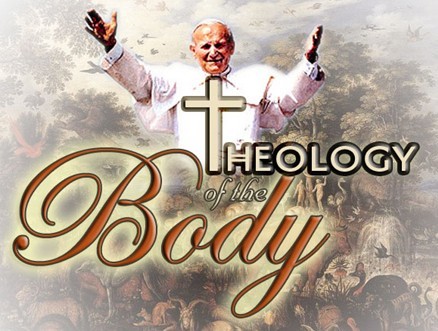
To accomplish this, Holy Wood will advocate the Pope John Paul II’s “Theology of the Body”, the approach to spirituality that emphasizes individual dignity, the complimentary roles of men and women, and how romantic love can only find fulfillment in marriage.

Holy Wood opened its doors in Culver City March 25th.

This new acting studio with spiritual vision will limit its initial class to 50 enrollees.

If its vision is realized perhaps my grandchildren will want to grow up to be the Holy Wood actors they see in the movies.

I invite you to join me in praying for this new studio’s success.

More information on Holy Wood Acting Studio can be found at http://www.holywoodactingstudio.com

Click here for more on Theology of the Body.

Holy Wood rather than Hollywood

In 07 Observations on 2013/07/12 at 12:00 AM
“In his  letter of recommendation for the Holy Wood Acting Studio, Los Angeles Archbishop Jose Gomez recalled Pope Benedict XVI’s address to artists where he called them “heralds and witnesses of hope for humanity.” Their pursuit of authentic beauty “unlocks the yearning of the human heart, the profound desire to know, to love, to go towards the Other, to reach for the Beyond.”

–Years before he was know as Pope John Paul II, Karol Wojtyla hoped to become an actor.

The late pontiff studied drama in his native Poland at Krakow’s Jagiellonian University. Later, while preparing for the priesthood at a clandestine seminary, he also was a member of the underground Rhapsodic theater company.

“Artistic talent is a gift from God,” John Paul once said. “And whoever discovers it in himself has a certain obligation: to know that he cannot waste his talent, but must develop it.”

The Holy Wood Acting Studio in California is following the beloved pope’s direction by helping aspiring actors develop both their artistic and spiritual gifts.

“Our mission is to turn out actors who will lead the way toward a moral center for the movie and television industry,” the studio’s website says. “All our courses emphasize personal and professional growth and development, not limiting such growth to acting potential, but also transforming the trainees into leaders in their families and community as well.”

Founded by a family of devout Catholics, the studio in Culver City, Calif., convened its first classes last month — a summer session for a dozen students — and is set to begin its first yearlong session (for up to 50 students) in September.

“Acting is more than just a career — it’s a calling,” co-founder Max Espinosa, the studio’s director of operations, told the National Catholic Register recently. “Why? Because it affects people. Art has the power to change people’s lives. Hollywood goes around the world and reaches the masses. It all starts with actors.”

The studio’s students are trained in the same Meisner acting technique taught at many secular acting studios. They also take courses in personal and spiritual development, nutrition and fitness.

“Hollywood is Hollywood. You can’t reinvent it, but you can affect and transform it through your own actions,” Joseph Griffin, a veteran actor and the father of 11 children who teaches a leadership course at the studio, told the National Catholic Register. “We can influence and
create a different narrative in Hollywood when we have these leaders. That’s what’s lacking.”

Griffin and Espinosa came up with their idea for the Holy Wood studio after a mutual friend — an Opus Dei priest — introduced them. Most of the instructors at the studio are, like Griffin and Espinosa, practicing Catholics.

In the Catholic tradition, there is a long history of engagement with the arts. Actors even have their own patron saint — Genesius, a third-century Roman actor who performed in a number of plays (at the behest of the emperor Diocletian) that mocked Christianity.

According to legend, Genesius had a conversion experience on stage while performing in a satirical play about baptism when he had a vision of angels holding a book where all of his sins were listed. As the story goes, Genesius asked to be baptized — for real — while still onstage,
enraging Diocletian who had the actor beheaded when he refused to renounce his newfound faith.

Genesius, considered a martyr for the faith, is also a patron saint of comedians, dancers, clowns, musicians, stenographers, epileptics and torture victims.

Catholics have been working in the entertainment industry for many years and more than a few have achieved great celebrity and acclaim, such as actors Martin Sheen, John Mahoney and Nicole Kidman, and directors Martin Scorsese, Joe Eszterhas and actor/director Mel Gibson.

Gibson’s 2004 film, “The Passion of the Christ,” the highest-grossing R-rated film of all time at more than $611 million worldwide, is widely considered to have been a Hollywood “game changer,” opening the door in the industry for film and television projects that deal explicitly with issues of faith.

In his June 7 letter of recommendation for the Holy Wood Acting Studio, Los Angeles Archbishop Jose Gomez recalled Pope Benedict XVI’s address to artists where he called them “heralds and witnesses of hope for humanity.” Their pursuit of authentic beauty “unlocks the yearning of the human heart, the profound desire to know, to love, to go towards the Other, to reach for the Beyond.”

The acting studio held its first classes on June 13, the day after Pentecost Sunday, which recalls the event described in the New Testament when, after Jesus’ resurrection, the Holy Spirit descended on his disciples — “as a mighty, rushing wind” in “tongues of fire.”

With that sacred wind propelling them, Holy Wood’s aspiring actors hope to discover a new kind of success in Hollywood — on a wing and a prayer.

Cathleen Falsani

Communion of Saints

In 07 Observations on 2013/07/05 at 12:00 AM

The Communion of Saints 

Detailed notes taken by Aida Tamayo on Fr. Robert Barron’s Catholicism Series

“There is only one real sadness in life…Not to be a saint.”  Spiritual writer Leon Bloy

A saint is someone who is in heaven someone that allowed the grace of God to invade him/her.  This grace doesn’t compromise or undermine what it invades, it enhances.  That is the nature of grace, if we cooperate with God’s grace, we’ll experience life to the fullest.  Fr. Barron suggests that a saint is someone that allowed Jesus to get into his/her boat.  To see this dynamic at play, just examine the lives of the saints.  Fr. Barron explores the lives of 4 relatively speaking modern saints.  We can see how Jesus graciously invaded their lives and with their cooperation transfigured them from the inside out.   Two of them are dear to my Carmelite heart:  St. Therese of Lisieux, and Edit Stein who became St. Teresa Benedicta of the Cross.  I identify somewhat with Edith in that it was the great Teresa of Jesus (of Avila) that enkindled in her desire for Carmel.

Before we look at these saints, how about us? We should want to be a saint and should never settle for second best.   That is what we’ve been designed for, that is the principle purpose of the Church, to help us become saints.   We want to be a saint because only saints live in heaven.  It may be through a long process of purification in this life or the one to come, but nevertheless when you get to Heaven, you have achieved that state of perfection (we call a saint) and are thus united to God.  As Father Barron said “Wanting to be the most successful, wealthiest person in the world is a stupid waste of time but to want to be a saint, that is the way to go.  That is a great thing to desire. “

Thomas Aquinas’ sister once asked him what she had to do to be a saint.  He said “Will IT”!  He is right.  Part of our problem is that we accept a kind of spiritual mediocrity.  Me a saint … really?  Really! A big part of it is to want it, to move beyond the spiritual mediocrity and say I want to be a person of heroic virtue and follow Christ with all my heart and stop playing the game of false humility by saying “I can never do that”.  No, for God all things are possible and He can make a saint out of any of us but we have to desire it and cooperate with Him.

Four Saints

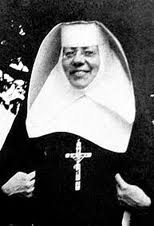
Unknown-5Katherine Drexel.  She came from one of the riches families in the USA.  Born 11/26/1 858, her parents were devout Catholics. They had a chapel in their home and her father retired to it for prayer every day after work and did works of charity.  They drilled into their children that their wealth had been entrusted to them and was destined to be used for the common good.  At 14 years old, Katherine met Fr. O’Connor who had a tremendous influence on her.  Under his direction, she laid out a program to grow in holiness.  At age 20 her parents died within months of each other and Katherine inherited the equivalent of $400 million today.  She was plagued with a sense of anxiety and indecisiveness.  During a trip to Europe, she had a meeting with the Pope and kneeling in front of him offered her support to the order of priests or nuns he wished to send to evangelize the Native Americans and the colored people, the most disadvantaged groups in the US.  The Pope suggested she should be that missionary. Visibly affected, she left the Vatican and sobbed as she thought of the enormity of such a task.  She felt God was calling her to be a nun and perhaps form an order dedicated to the poorest ones in America.  She fully dedicated herself and used her money for her tremendous mission.  It was justice elevated, transfigured, rendered luminescent by grace.  With Katherine’s cooperation, Jesus had so seized her life that now she had become an icon of His Presence. She died in 1955.

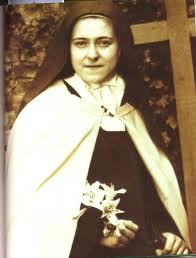
Unknown-4Thérèse of Lisieux. Born in 1/2/1873, her parents were pious devout members of the French middle class.  She had a blissful childhood until her mother died in 1877 when Therese was 4 years old.  When miraculously cured from a psychological and physical illness, Thérèse saw it as a manifestation of God’s grace, God’s unmerited love.  She would become one of the doctors of grace in our church.  She understood clearly that grace was necessary for the spiritual life and this grace required our cooperation with God’s love.  She became a Carmelite nun at the age of 15 after begging those in authority, including the Pope, to enter at such a young age.  She lived 9 years in the Carmelite convent until her death at age 24 and during this time she developed a spirituality known as the little way which she was ordered to write by her spiritual director in her autobiography the Story of a Soul.  Her Little Way involved doing simple and ordinary things out of great love, small sacrifices accepted gratefully.  Thérèse was plagued at the end of her life with the darkness of unbelief to join in the pain of so many souls that did not believe in God.  She wrote that in a joyful Easter, Jesus helped her understand that there are souls who have no faith.  He allowed her soul to be invaded by the thickest darkness and she interpreted this struggle as a participation in the pain of so many of her contemporaries who no longer believe in God. She died of tuberculosis on 9/30/1897 at age 24.  Hardly known by anyone at her death, she became known worldwide within a few years of her death due to her autobiography of “Story of a Soul”. We can characterize her holiness as transfigured prudence which was elevated by Christ’s love.  Like a little child, Thérèse let God pick her up and raise her to the heights.  Her loving and trusting “little way” allowed her to open herself fully to the grace of God.

Unknown-6Edith Stein was born 10/12/1891 in Breslau in Poland to pious Jewish parents. She also had a privileged childhood.  She was smart and strong willed.  Her father died when she was still young and as she grew older she became an atheist.  Highly intellectual, s he studied for a doctorate under Husserl the master of phenomenology.  Upon obtaining the doctorate in 1915, Husserl asked her to work alongside him but treated her as glorified secretary leaving her highly dissatisfied with her job.  Her friends were scandalized that someone of her great intellect was forced to perform such simple tasks.  During this time a good friend was killed in the war and she went to visit his widow, expecting to see her devastated but instead she was sad but fundamentally at peace.   That serenity came from the woman’s Christian faith.   Edith later wrote: “It was my first encounter with the cross and the divine power it bestows upon those who carry it”.   Jesus was getting into Edith’s boat.  There were other moments that occurred that led her to eventual conversion, similar to the one experienced by Blessed Newman’s or St. Augustine’s – a gradual interior conversion that was accompanied by much intellectual wrestling.

This is where I identify with Edith Stein.  One day she was staying with friends and to pass the time picked a copy of Teresa of Avila’s autobiography.  She spent the whole night reading it and when she put the book down she simply said:  That is the truth.  She wouldn’t say what about the book impressed her, but like me, it was the galvanizing moment when all the strands came together.  After a few days of thinking and praying she went to the local priest and asked to be baptized.  When he questioned her readiness, she eagerly asked him to test her.  She was received into the Church 1/1/1922.  She immediately wanted to join the Carmelites but she was asked to wait.  Eleven years later in 1933 she was accepted into the Carmel in Cologne.   In 1938 Germany was invaded by the Nazis and eventually the Gestapo came for Edith in 8/2/1942 and took her away with her sister who had also joined the order.  During the journey she comforted and helped distraught mothers and their children.  She was murdered in Auschwitz in 8/9/1942 in the gas chamber.  What we see in a martyr like Edith is not normal courage, but courage elevated and transformed through love.  She was willing to give her own life out of love for Christ and His people.

Unknown-7Teresa of Calcutta was born Agnes Gonxha Bojaxhiu on 8/26/1910 in Serbia.  At 12 she felt the call to religious life and at 18 enter the Loreto Sisters and took the name sister Mary Teresa  of the Child Jesus after the just canonized Thérèse of Lisieux, the Little Flower.  After some time in Ireland she sailed for India and saw unbelievable poverty.  She worked incessantly in helping the poor to the point of a breakdown.  During her recuperation time she felt Jesus’ call to her to serve the poorest of the poor an d to follow Him with reckless abandon.  She understood it as a summons to slake the thirst of Jesus for souls.  It took a while but she was eventually released from her vows with the Loreto Sisters and allowed to found her own community, the Missionaries of Charity whose mission was to serve the poorest of the poor.  Formal approval came from the Vatican in April of 1948.  This is something important to understand about the lives of the saints.  When a work is of God, people are drawn to it and so many of Mother Teresa’s own students came to join her here in Calcutta.  They lived in same poverty as those they served.  From this small beginning the order expanded to over 500 missions on six continents.  Mother Teresa said if there are poor people on the moon we shall go there too!  In time, Mother became a world renowned figure wining the Nobel Peace Prize in 1979 and used her Nobel speech time as a way to decry abortion which she saw as the greatest enemy of peace in contemporary society.  She experienced extraordinary closeness to Jesus most of her life but when her order got underway, she experience just the opposite, her unique participation in the suffering of Christ, an aching sense of the Lord’s absence.  This darkness lasted for the rest of her life.  She felt a terrible pain of loss. She had no joy in her work. She came to understand that her suffering was a sharing in the passion of Jesus, and His feelings as being abandoned by the Father.  She entered more deeply into the suffering of those she longed to serve.  This experience was not unlike her namesake, Therese of Lisieux who suffered the same type of darkness at the end of her life.  Mother Teresa died on 9/5/1997 at age of 87. Temperance is the virtue by which we control our desires for food, drink and pleasure so that we might achieve the demands of justice.  Mother Teresa was elevated and transfigured in temperance –  a disciplining of the desires that goes beyond the requirement of justice so as to serve the infinite demands of love.

The beauty of the church can be found in the tremendous differences it has in its saints: from a towering intellectual as Thomas Aquinas to St. Francis, who wasn’t much of an intellectual at all.  There is Joan of Arc, a warrior saint and non-violent saints.  This is the glory of what we call the communion of saints.  Each one of the four saints in this video segment allows a unique dimension of the Divine Holiness to shine through.  Katherine Drexel produced a miracle of transfigured Justice; Edith gave us the clarity of her intellectual work and the beauty of her martyrdom; Thérèse of Lisieux gave us the Little Way; and Mother Theresa brought forth the Missionaries of Charity.  The church needs the diversity of the saints to show the infinite intensity of God’s goodness.

Friendship by Fr. Joshua Voitus

In 07 Observations on 2013/06/28 at 12:00 AM

Misuse of the word “friend” in our modern society is unfortunate: friendship has been diluted to include mere acquaintances, even people on the internet whom we might not even really know. A lack of proper understanding of friendship diminishes our ability to form true spiritual friendships with people here on earth. But even more tragic is that this misunderstanding of friendship also has the potential to damage our relationship with God.

At their core, authentic friendships – like any relationship based on love – involve two or more people who seek the good of the other. True friends, then, aside from sharing common interests and enjoying each other’s company (of course, which is important,  as you cannot truly build a friendship without spending time with the other), build each other up in word and in action. This building up reaches its peak and perfection in each friend assisting the other, not only in earthly tasks and trials, but in reaching the ultimate good of heaven.

Think, then, how important true friends are in our journey home to God! They will not only encourage us in our following of Christ, but they will also admonish us when we fail to live as we ought.

As St. Ambrose tells us in“On the Duties of the Clergy,” “(R)ebukes are good, and often better than a silent friendship … for the ‘wounds of a friend are better than the kisses of flatterers.’ (Proverbs 27:6) Rebuke, then, your erring friend … for friendship ought to be steadfast and to rest firm in true affection.”

A true friend will, therefore, love us enough to share in our joy and encourage us in virtue, and also have concern enough for us to correct us when we stray from the true path. For our part, if we are to be good friends, we must have the courage to do the same. Friendship, then, involves not only joy and happiness, but, at times, a sense of sacrifice when we might have to put aside our own desires to rebuke a friend or – far more painfully – humbly receive a rebuke from a true friend.

We must, therefore, recognize that friendship, in its authentic sense, is more than merely liking somebody’s company or having mutual interests. It implies a certain mutual exchange of love and concern for the good of the other, even to the point of a certain sacrifice of time or comfort. This exchange not only aids and supports us in our quest to grow in virtue and struggle against sin, but it can become a model in this life for our relationship with God Himself.

Our misunderstanding of the nature of authentic human friendship may potentially lead us to a misunderstanding of what God calls us to when He says He desires to be our friend.

Yes, God invites us to friendship with Himself: “No longer do I call you servants, for the servant does not know what his master is doing; but I have called you friends.” (John 15:15).

I can think of no higher calling than to be a friend of God Himself. Yet, if we misunderstand the nature of true friendship, then we run the risk of misunderstanding the nature of the relationship to which God is calling us.

A true friendship is, among other qualities, a mutual exchange of love and concern for the other. God, for His part, has demonstrated this love and concern in countless ways. He has done so in the act of our creation, in His revealing of Himself and His Will through the law and through Christ (who is the very word of God and is God Himself), and, ultimately in the sacrifice of the Cross, for “greater love has no man than this, that a man lay down his life for his friends.” (John 15:13) Even God, like a true friend, rebukes us when we go astray so that we may return to Him in love.

This free gift of God is wonderful, but if we are to be true friends of God, it is not enough for us to passively “like” what He has done for us as we would a “friend” on Facebook. Rather, we are called to an active response to His love – a response of love which impels us to follow God, even sacrificing ourselves and our desires to serve Him, just as we would a true friend.

Christ Himself says much the same thing when He tells the Apostles, “you are my friends if you do what I command you.” (John 15:14) To be friends of God, we must treat Him as we would a true friend. We must spend time with Him in prayer (especially prayer before the Blessed Sacrament). We must study scripture and the teachings of the Church to learn His will (much like we would seek to find out the desire of our friend), and follow His will, even to the point of giving up anything which might separate us from Him. Then may we call ourselves true friends of God: people who know Him, love Him and serve Him, and who give thanks for all that He has done for us in friendship and in love.

Thus we can see how all true friendship is based on the love of God. All true friends will seek to guide each other, ultimately, to the supreme good which is God. They will do so even if it means discomfort or sacrifice. They will place the other person before themselves. By doing so, they provide a mirror and an example for the friendship to which God calls each one of us. Let us pray that we may be blessed by God with true friends in this life, and that we share in the joy of perfect friendship with Him now and in the life to come.

Father Joshua Voitus is the parochial vicar of St. Vincent de Paul Church in Charlotte. Read the Nov.9 online at www. catholicnewsherald.com.

The Unexpected Debate by Linda Grazow

In 07 Observations on 2013/06/14 at 12:00 AM

Up until the 21st century, no reasonable human being, of faith or not, would have ever deemed it possible that the definition and understanding of marriage could be the subject of a statewide vote to either protect it or to redefine and reinvent it as something other, something less than what it has always been. The ever increasing relativism and disregard for absolute truths based on natural law in our society has put us at an unimaginable crossroads at this moment in history. This is a country founded and fought for, where religious liberty (freedom of religion, not freedom from religion) and true freedom would form the ideal society—true freedom, not to do whatever we want, but the liberty to do what is right.

In the midst of desensitization, through the media, targeted especially toward the younger generations to unprecedented violence, pornography, divorce and homosexual activity, there appears a trend toward indifference to this critical issue of what constitutes marriage and even growing support for radical negation of an undeniable truth. Many say, “What’s the big deal? I don’t have to approve of their lifestyle. If they want to get married, who cares?” It is a lack of understanding and an exaggerated expression of tolerance for any desire, urge, want, or fashionable cause that is automatically presumed to be a “right,” even if it goes against the very nature of what it means to be a man or woman, violates the natural law and ultimately corrupts and devolves the society into chaos.

Biology Lesson & Common Sense 

Males and females are physically different and are so obviously meant to join together like two puzzle pieces that fit perfectly. Further, when they join together in that beautifully perfect way, the physical reality often results in a chain of events that actually creates a new male or female.

Take for example the classic children’s toy, Tinker Toys. The inventor of Tinker Toys created simple wooden wheels with holes, and sticks which would fit perfectly into the holes. As these individual pieces are connected together, a fantastic building process takes place, limited only by the number of pieces in the set and the child’s imagination. But if one were to take all of the wheels by themselves and try to build something, the best would be to build a tower or perhaps a pyramid, which would be easily knocked down. So too, the sticks by themselves do not have the ability to build anything. It is only through the joining of the wheels and the sticks that something wonderful and structurally stable can be built.

In the same way, neither females by themselves nor males by themselves can build a wonderful and structurally stable family, community or society. In fact, the species would die out! So the primary biological purpose of sexuality for animals and humans is to procreate to ensure the species’ survival. The United States Supreme Court agreed when it said that marriage is “fundamental to the very existence and survival of the (human) race.”  In the human species, because of the added element of the soul, sexuality takes on a much deeper meaning and purpose. We are wired not only to perpetuate our community, but also to love and protect others within that community. We do this through different bonds of love depending upon our relationship to another person.

Friendship and Beyond 

We are all born capable of loving and being loved, and in fact, we need it. There are many forms that love can take, for example, the love between a mother and her child, the love between two friends, the love between a child and his dog, and the love between a man and a woman. Between two human beings, married love is the fullest expression of love. This has been true throughout human history because it requires a lifelong, faithful commitment between a man and a woman, usually witnessed by others in the community, to love and protect each other and to love and protect the children who are created out of their sexual union. This definition of marriage “has served as the very cornerstone of civilization and culture from the start.” (Archbishop Timothy Dolan)

Although we could say that a great bond of love exists between a mother and her child, we would never say that the two could be married. We could admire the bond of love between a child and his dog, but we would never say that the two could be married. In these instances, the nature of the bond of love does not fit the reality of what marriage is. Two men or two women could be great friends and enjoy each other’s company and they may have a logical expectation that they will have a lifelong friendship. But their bond of friendship love will never fit the reality of what marriage is by definition.

Dignity and Rights 

Each human being is born with inherent goodness. Even someone born with a physical or mental disability is endowed with an inherent goodness and dignity and is entitled to certain rights to life and liberty. As such, a society or culture recognizes basic natural laws—laws that are instinctively known by each individual–that protect the dignity and rights to life and liberty of its individual members. For example, a natural law would be the instinctive knowledge that killing another human being takes away that person’s right to live. Therefore, it becomes “against the law” to kill another person.

Another natural law is in the area of sexuality. Instinctively, individuals know that they are physically made as a male or a female and know that they are made to fit together complementarily for procreation. In the same way that circumstances, environment and temperament can affect a person to the point where he no longer honors the natural law against killing and instead chooses to fulfill an errant desire to commit murder, these same elements can affect a person to the point where he no longer honors the natural law of sexuality and instead gives in to an errant desire to commit rape, incest, pedophilia or homosexual acts.

Although the dignity of the person who commits such acts must be respected, the behaviors themselves cannot be allowed to supersede the natural laws that exist for the good of other individuals and that of society as a whole.  As specifically related to the question of rights for homosexual individuals, Archbishop Timothy Dolan clarified that “the Church affirms the basic human rights of gay men and women, and the state has rightly changed many laws to offer these men and women hospital visitation rights, bereavement leave, death benefits, insurance benefits, and the like. This is not about denying rights. It is about upholding a truth about the human condition.”  Logically, it is not about denying homosexual couples a “right” to marriage since, by the very definition of marriage, that “right” does not exist for them in the first place.

Real versus Counterfeit 

Over the last several years, a very small group of people in this country has been forcefully pushing an agenda to change our society’s view on homosexuality even to the point of demanding that homosexual couples be allowed to marry. Although it is easy to psychologically understand their overwhelming and desperate desire to have their unnatural sexual actions be accepted as “normal” and just another lifestyle choice among many, the reality is that it is a counterfeit of reality. The very fact that in discussions it is referred to as “gay marriage” openly acknowledges that it is not the real thing—the word “marriage” has to be qualified with the word “gay” because it is different and not the same. Think of the popular game Monopoly and Monopoly money. The qualifying word “Monopoly” reveals that it is different from the real money used in our country on which our whole economy is based. What would happen if our country decided to allow a counterfeit to commingle with reality?

Although both are made of paper, money from the game cannot be used to buy things in real life. Why can you not go into a store and buy a loaf of bread with Monopoly money? Is it because the paper itself is not good? No, it is because the value of the exchange of that paper is not backed by a tangible valuable asset such as gold.

Suppose a small group of people in this country decided to pool all of their Monopoly money and present it at a store to buy food. The store would refuse to sell, not because those presenting the money are not good people, but because the money they are trying to use is not real. Imagine the group presents a plea to the government saying they are trying to buy food and the store will not sell it to them. What would happen to the economy of that society if the government ruled that the store must accept Monopoly money from that group? Chaos and economic collapse would result because real and counterfeit money cannot be circulated at the same time.

In the same way, a small group of people who think they have a “right” to go to the government and say they want to have the ability to get “married” is proposing that it would be acceptable to have a counterfeit institution pass for the real thing. But the result for the society would also be collapse. In addition, once something counterfeit is forced to be accepted as the real thing, any entity that does not honor the counterfeit would be punished for discrimination. This is what would happen in our country to churches, businesses and individuals who, based on their faith, morals and ethical standards, refused to accept the counterfeit.

Protecting Marriage 

Although it seemed impossible that the integrity of the true meaning of marriage would someday need to be protected, that day is here. Thirty states have already passed an amendment to their state constitutions protecting the definition of marriage as the union of one man and one woman. This is due to the current vulnerability of marriage as an institution, one which is the basic building block of a civilized and productive society, to be subject to activist judges and lawmakers who would impose decisions changing the real definition of marriage to allow its counterfeit “same-sex marriage.” Marriage is the logical, ideal and intended haven for the procreation, protection and raising of children. This is supported by an overwhelming body of social science evidence. Of course, for those who truly believe in the God who created man and woman and are still unsure, He has provided a most explicit and definitive answer to what the outcome of this unexpected debate should be.  (Genesis 1:27-28, 2:21-25, Leviticus 20:13, 18:22-24, Romans 1:24-32, 1 Corinthians 6:9-10).