2cornucopias

Archive for the ‘07 Observations’ Category

Race Relations and Law Enforcement

In 07 Observations on 2015/03/06 at 12:00 AM


Screen Shot 2015-03-05 at 8.30.31 AM

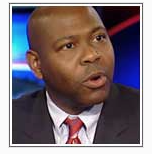
Jason L. Riley
Editorial Board Member, Wall Street Journal

Jason L. Riley on Race Relations and Law Enforcement    Jason L. Riley is an editorial board member and a senior editorial page writer at the Wall Street Journal, where he writes on politics, economics, education, immigration, and race. He is also a FOX News contributor and appears regularly on Special Report with Bret Baier. Previously, he worked for USA Today and the Buffalo News. He earned a bachelor’s degree in English from the State University of New York at Buffalo. He is the author of Please Stop Helping Us: How Liberals Make It Harder for Blacks to Succeed.

The following is adapted from a speech delivered on January 30, 2015, at Hillsdale College’s Allan P. Kirby, Jr. Center for Constitutional Studies and Citizenship in Washington, D.C., as part of the AWC Family Foundation Lecture Series.

Thomas Sowell once said that some books you write for pleasure, and others you write out of a sense of duty, because there are things to be said—and other people have better sense than to say them. My new book, Please Stop Helping Us, falls into that latter category. When I started out as a journalist 20 years ago, I had no expectation of focusing on race-related topics. People like Sowell and Shelby Steele and Walter Williams and a few other independent black thinkers, to my mind at least, had already said what needed to be said, had been saying it for decades, and had been saying it more eloquently than I ever could. But over the years, and with some prodding from those guys, it occurred to me that not enough younger blacks were following in their footsteps. It also occurred to me that many public policies aimed at the black underclass were just as wrongheaded as ever. The fight wasn’t over. A new generation of black thinkers needed to explain what’s working and what isn’t, and why, to a new generation of readers. And the result is this book, which I hope will help to bring more light than heat to the discussion of race.

The book is not an autobiography or a memoir, but I do tell a few stories about growing up black and male in the inner city. And one of the stories involves a trip back home to Buffalo, New York, where I was born and raised. I was visiting my older sister shortly after I had begun working at the Wall Street Journal, and I was chatting with her daughter, my niece, who was maybe in the second grade at the time. I was asking her about school, her favorite subjects, that sort of thing, when she stopped me and said, “Uncle Jason, why you talk white?” Then she turned to her little friend who was there and said, “Don’t my uncle sound white? Why he tryin’ to sound so smart?”

She was just teasing, of course. I smiled and they enjoyed a little chuckle at my expense. But what she said stayed with me. I couldn’t help thinking: Here were two young black girls, seven or eight years old, already linking speech patterns to race and intelligence. They already had a rather sophisticated awareness that, as blacks, white-sounding speech was not only to be avoided in their own speech but mocked in the speech of others.

I shouldn’t have been too surprised by this, and I wasn’t. My siblings, along with countless other black friends and relatives, teased me the same way when I was growing up. And other black professionals have told similar stories. What I had forgotten is just how early these attitudes take hold—how soon this counterproductive thinking and behavior begins.

New York City has the largest school system in America. Eighty percent of black kids in New York public schools are performing below grade level. And a big part of the problem is a black subculture that rejects attitudes and behaviors that are conducive to academic success. Black kids read half as many books and watch twice as much television as their white counterparts, for example. In other words, a big part of the problem is a culture that produces little black girls and boys who are already worried about acting and sounding white by the time they are in second grade.

Another big part of the problem is a reluctance to speak honestly about these cultural shortcomings. Many whites fear being called racists. And many black leaders have a vested interest in blaming black problems primarily on white racism, so that is the narrative they push regardless of the reality. Racism has become an all-purpose explanation for bad black outcomes, be they social or economic. If you disagree and are white, you’re a bigot. If you disagree and are black, you’re a sell-out.

The shooting death of a young black man by a white police officer in Ferguson, Missouri, last year touched off a national discussion about everything except the aberrant behavior of so many young black men that results in such frequent encounters with police. We talked about racial prejudice, poverty, unemployment, profiling, the tensions between law enforcement and poor black communities, and so forth. Rarely did we hear any discussion of black crime rates.

Homicide is the leading cause of death for young black men in the U.S., and around 90 percent of the perpetrators are also black. Yet for months we’ve had protesters nationwide pretending that our morgues are full of young black men because cops are shooting them. Around 98 percent of black shooting deaths do not involve police. In fact, a cop is six times more likely to be shot by someone black than the opposite. The protestors are pushing a false anti-cop narrative, and everyone from the president on down has played along.

Any candid debate on race and criminal justice in this country would have to start with the fact that blacks commit an astoundingly disproportionate number of crimes. Blacks constitute about 13 percent of the population, yet between 1976 and 2005 they committed more than half of all murders in the U.S. The black arrest rate for most offenses—including robbery, aggravated assault, and property crimes—is typically two to three times their representation in the population. So long as blacks are committing such an outsized amount of crime, young black men will be viewed suspiciously and tensions between police and crime-ridden communities will persist. The U.S. criminal justice system, currently headed by a black attorney general who reports to a black president, is a reflection of this reality, not its cause. If we want to change negative perceptions of young black men, we must change the behavior that is driving those perceptions. But pointing this out has become almost taboo. How can we even begin to address problems if we won’t discuss them honestly?

“High rates of black violence in the late twentieth century are a matter of historical fact, not bigoted imagination,” wrote the late Harvard Law professor William Stuntz. “The trends reached their peak not in the land of Jim Crow but in the more civilized North, and not in the age of segregation but in the decades that saw the rise of civil rights for African Americans—and of African American control of city governments.”

The Left wants to blame these outcomes on racial animus and poverty, but back in the 1940s and ’50s, when racial discrimination was legal and black poverty was much higher than today, the black crime rate was lower. The Left wants to blame these outcomes on “the system,” but blacks have long been part of running that system. Black crime and incarceration rates spiked in the 1970s and ’80s in cities such as Cleveland, Detroit, Chicago, and Philadelphia under black mayors and black police chiefs. Some of the most violent cities in the U.S. today are run by blacks.

Some insist that our jails and prisons are teeming with young black men due primarily to racist drug laws, but the reality is that the drug laws are neither racist nor driving the black incarceration rate. It’s worth remembering that the harsher penalties for crack cocaine offenses that were passed in the 1980s were supported by most of the Congressional Black Caucus, including Rep. Charles Rangel of Harlem, who at the time headed the House Select Committee on Narcotics Abuse and Control. Crack was destroying black communities and many black political leaders wanted dealers to face longer sentences. In other words, black legislators in Washington led the effort to impose tougher drug laws, a fact often forgotten by critics today.

When these laws passed, even their opponents didn’t claim that they were racist. Those charges came later, as the racially disparate impact of the laws became apparent. What’s been lost in the discussion is whether these laws leave law-abiding blacks better off. Do you make life in the ghetto harder or easier by sending thugs home sooner rather than later? Liberal elites would have us deny what black ghetto residents know to be the truth. These communities aren’t dangerous because of racist cops or judges or sentencing guidelines. They’re dangerous mainly due to black criminals preying on black victims.

Nor is the racial disparity in prison inmates explained by the enforcement of drug laws. Blacks are about 37.5 percent of the population in state prisons, which house nearly 90 percent of the nation’s inmates. Remove drug offenders from that population and the percentage of black prisoners only drops to 37 percent. What drives black incarceration rates are violent offenses, not drug offenses. Blacks commit violent crimes at seven to ten times the rate that whites do. The fact that their victims tend to be of the same race suggests that young black men in the ghetto live in danger of being shot by each other, not cops. Nor is this a function of blacks being picked on by cops who are “over-policing” certain neighborhoods. Research has long shown that the rate at which blacks are arrested is nearly identical to the rate at which crime victims identify blacks as their assailants. The police are in these communities because that’s where the 911 calls originate.

If liberals want to help reverse these crime trends, they would do better to focus less on supposed racial animus and more on ghetto attitudes towards school, work, marriage, and child-rearing. As recently as the early 1960s, two out of three black children were raised in two-parent households. Today, more than 70 percent are not, and the number can reach as high as 80 or 90 percent in our inner cities. For decades, studies have shown that the likelihood of teen pregnancy, drug abuse, dropping out of school and other bad social outcomes increases dramatically when fathers aren’t around. One of the most comprehensive studies ever undertaken in this regard concluded that black boys without a father are 68 percent more likely to be incarcerated than those with a father—that overall, the most critical factor affecting the prospect of young males encountering the criminal justice system is the presence of a father in the home. All other factors, including family income, are much less important.

As political scientist James Q. Wilson said, if crime is to a significant degree caused by weak character, if weak character is more likely among children of unmarried mothers, if there are no fathers who will help raise their children, acquire jobs, and protect their neighborhoods, if boys become young men with no preparation for work, if school achievement is regarded as a sign of having sold out—if all these things are true, then the chances of reducing the crime rate among low income blacks anytime soon is slim.

Many on the Left sincerely want to help the black underclass. The problem is that liberals believe bigger government is the best way to help. But having looked at the track record of government policies aimed at helping the black underclass, I’m skeptical.

This year marks the 50th anniversary of President Lyndon Johnson’s commencement speech at Howard University. Johnson had signed the Civil Rights Act a year earlier and would sign the Voting Rights Act two months later. And he used the speech to talk about what the government should do next on behalf of blacks. These two laws marked merely the end of the beginning, he said:

That beginning is freedom; and the barriers to that freedom are tumbling down. Freedom is the right to share, share fully and equally, in American society—to vote, to hold a job, to enter a public place, to go to school. . . . But freedom is not enough. . . . You do not take a person who, for years, has been hobbled by chains and liberate him, bring him up to the starting line of a race and then say, “you are free to compete with all the others,” and still justly believe that you have been completely fair. . . . The next and the more profound stage of the battle for civil rights [is] . . . not just equality as a right and a theory but equality as a fact and equality as a result.

But what if Johnson was mistaken? What if there are limits to what government can do beyond removing barriers to freedom? What if the best that we can hope for from our elected officials are policies that promote equal opportunity? What if public policy makers risk creating more problems and barriers to progress when the goal is equal outcomes?

The civil rights struggles of the mid-20th century exemplified liberalism at its best. The 1964 Civil Rights Act and the 1965 Voting Rights Act outlawed racial discrimination in employment and education and ensured the ability of blacks to register and vote. All Americans can be proud of these accomplishments. But what about the social policy and thinking that arose from the ruins of Jim Crow? Good intentions aside, which efforts have facilitated black advancement, and which efforts have impeded it?

In 1988, right around the 25th anniversary of the Great Society, Harvard sociologist Nathan Glazer published a book called the The Limits of Social Policy. Glazer analyzed Great Society programs from the perspective of someone who believed that government action was the best way to improve the lot of blacks. But his assessment humbled him. He concluded that in many ways, the Great Society programs were causing just as many problems as they were solving—that good intentions aren’t enough.

Unlike Nathan Glazer, many policy makers today are still riding high on good intentions. They don’t seem particularly interested in reconsidering what has been tried, even though 50 years into the war on poverty the result isn’t pretty. While gains have been made, significant racial disparities remain in some areas and black retrogression has occurred in others. The black-white poverty gap has widened over the past decade and the black poverty rate is no longer falling. The black-white disparity in incarceration rates today is larger than it was in 1960. And the black unemployment rate has, on average, been double the white rate for five decades.

Confronted with these statistics, liberals continue to push for more of the same solutions. Last year, President Obama announced yet another federal initiative aimed at helping blacks—an increase in preschool education, even though studies (including those released by his own administration) have shown no significant impacts in education from such programs. He said that he wants to increase reading proficiency and graduation rates for minority students, yet he opposes school voucher programs that are doing both. He continues to call for job-training programs of the sort that study after study has shown to be ineffective.

Fred Siegel, an expert on urban public policy, has written extensively about the liberal flight from evidence and empiricism that began in the 1960s. The Left, wracked by guilt over America’s diabolical treatment of blacks, decided to hold them to different standards of behavior. Blacks, Siegel writes, were invited to enter the larger society on their own terms. Schools, which had helped poor whites, ceased incorporating poor blacks from the South into the mainstream culture. Discipline as a prerequisite for adult success was displaced by the authentic self-expression of the ill-educated. Blacks were not culturally deprived but simply differently-abled—more spontaneous and expressive and so forth. Liberals tried to improve conditions for blacks without passing judgment on antisocial black culture. And this sort of thinking continues to this day. Walter Williams once wrote that he’s glad he grew up in the 1940s and ’50s, before it became fashionable for white people to like black people. He received a more honest assessment of his strengths and weaknesses, he says, than black kids today are likely to receive from white teachers and employers who are more interested in being politically correct.

After George Zimmerman was acquitted in the shooting death of Trayvon Martin, President Obama explained the black response to the verdict this way. Blacks understand, he said, that some of the violence that takes place in poor black neighborhoods is born out of a very violent past in this country, and that the poverty and dysfunction that we see in those communities can be traced to that history. In other words, Obama was doing exactly what the Left has been conditioning blacks to do since the 1960s, which is to blame black pathology on the legacy of slavery and Jim Crow.

This is a dodge. That legacy is not holding down blacks half as much as the legacy of efforts to help. Underprivileged blacks have become playthings for intellectuals and politicians who care more about revelling in their good intentions or winning votes than advocating behaviors and attitudes that have allowed other groups to get ahead. Meanwhile, the civil rights movement has become an industry that does little more than monetize white guilt. Martin Luther King and his contemporaries demanded black self-improvement despite the abundant and overt racism of their day. King’s self-styled successors, living in an era when public policy bends over backwards to accommodate blacks, insist that blacks cannot be held responsible for their plight so long as someone, somewhere in white America, is still prejudiced.

The more fundamental problem with these well-meaning liberal efforts is that they have succeeded, tragically, in convincing blacks to see themselves first and foremost as victims. Today there is no greater impediment to black advancement than the self-pitying mindset that permeates black culture. White liberals think they are helping blacks by romanticizing bad behavior. And black liberals are all too happy to hustle guilty whites.

Blacks ultimately must help themselves. They must develop the same attitudes and behaviors and habits that other groups had to develop to rise in America. And to the extent that a social policy, however well-intentioned, interferes with this self-development, it does more harm than good.

This concept of self-help and self-development is something that black leaders once understood quite well, and at a time when blacks faced infinitely more obstacles than they face today. Asked by whites in 1865 what to do for freed blacks, Frederick Douglass responded: “I have had but one answer from the beginning. Do nothing with us! . . . If the apples will not remain on the tree of their own strength . . . let them fall! . . . And if the Negro cannot stand on his own legs, let him fall also. All I ask is, give him a chance to stand on his own legs!” Douglass was essentially saying, give blacks equal opportunity and then leave them alone.

Booker T. Washington, another late 19th century black leader who had been born a slave, once said that it is important and right that all privileges of the law be granted to blacks, but it is vastly more important that they be prepared for the exercise of these privileges.

Douglass and Washington didn’t play down the need for the government to secure equal rights for blacks, and both were optimistic that blacks would get equal rights eventually, although neither man lived to see that day. But both men also understood the limits of government benevolence. Blacks would have to ready themselves to meet the challenge of being in a position to take advantage of opportunities once equal rights had been secured. The history of 1960s liberal social policies is largely a history of ignoring this wisdom.

Imprimis.  Hillsdale College.   January 2015, Volume 44, Number 1

What does this tell your heart and mind?

In 07 Observations on 2015/01/16 at 12:00 AM

Screen Shot 2014-11-14 at 12.49.50 PM

Screen Shot 2014-11-14 at 12.51.44 PM


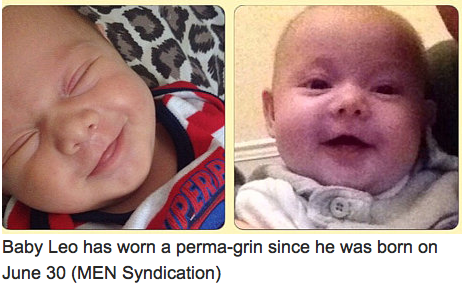
Little bundle of joy Leo David Hargreaves could just be the cheeriest baby in the country, according to his parents.

Not only does the five month-old smile all the time, he’s been smiling since before he was born.

A 4D ultrasound scan, taken when Leo’s mother, Amy Cregg, was 31 weeks’ pregnant, clearly shows him grinning from ear-to-ear.

Miss Cregg, 24, and her partner Leighton Hargreaves, of Church, Accrington Lancashire, say that baby Leo has continued to wear a perma-grin since he was born on June 30.

Modelling companies, and Next, the high-street fashion chain, have already been in touch with the couple to express an interest in signing-up Leo’s winning grin.

Miss Cregg, a rehabilitation support worker, said: “Leighton and I were absolutely shocked – even the people who did my scan were amazed.

“I’ve been walking in the park and had people come up to me and say, ‘What a gorgeous baby!’

But Miss Cregg and Mr Hargreaves, a painter and decorator, say there’s no rush to put pen to paper.

Baby Leo has worn a perma-grin since he was born on June 30 (MEN Syndication)

“I’d be interested in doing modelling, but only when Leo’s older.”

The 4D scan – which captured gender, growth and the weight – was taken at Babybond Ultrasound Direct clinic in Burnley.

A spokesman for the clinic said: “Our sonographer who scanned Amy and her gorgeous baby was overwhelmed at her smiley baby throughout the entire scan.

“I think we can safely say that Amy’s baby has been the smiliest baby we’ve ever seen.”


The Telegraph

Mother and Child

In 07 Observations on 2014/12/25 at 12:00 AM

Jesus’ mother, Mary, is an essential and integral par of God’s plan for our redemption.

You cannot separate this mother from her child: Jesus and Mary go together.

Christ is given to us through His mother.

God chose to request a woman’s consent for His plan; what a testimony to God’s view of womanhood!

Feast of Sts. Michael, Gabriel and Raphael, Archangels

In 07 Observations on 2014/09/26 at 12:00 AM

 John Henry Newman: “The Powers of Nature” (Parochial and Plan Sermon 29 [Feast of St. Michael])  excerpts

“There have been ages of the world, in which men have thought too much of Angels, and paid them excessive honour; honoured them so perversely as to forget the supreme worship due to Almighty God. This is the sin of a dark age. But the sin of what is called an educated age, such as our own, is just the reverse; to account slightly of them, or not at all; to ascribe all we see around us, not to their agency, but to certain assumed laws of nature. This, I say, is likely to be our sin, in proportion as we are initiated into the learning of this world; – and this is the danger of many (so called) philosophical pursuits, not in fashion, and recommended zealously to the notice of large portions of the community, hitherto strangers to them, – chemistry, geology, and the like; the danger, that is, of resting in things seen, and forgetting unseen things, and our ignorance about them 
 
“(W)hy do rivers flow? Why does rain fall? Why does the sun warm us? And the wind, why does it blow? Here our natural reason is at fault; we know, I say, that it is the spirit in man and in beast that makes man and beast move, but reason tells us of no spirit abiding in what is commonly called the natural world, to make it perform its ordinary duties. Of course, it is God’s will which sustains it all; so does God’s will enable us to move also, yet this does not hinder, but, in one sense we may be truly said to move ourselves: but how do the wind and water, earth and fire, move? Now here Scripture interposes, and seems to tell us, that all this wonderful harmony is the work of Angels. Those events which we ascribe to chance as the weather, or to nature as the seasons, are duties done to that God who maketh nature as the season, are duties done to that God who maketh His Angels to be winds, and His Ministers a flame of fire. For example, it was an Angel which gave to the pool at Bethesda it medicinal quality; and there is no reason why we should doubt that other health-springs in this and other countries are made such by a like unseen ministry. The fires on Mount Sinai, the thunders and lightnings, were the work of Angels; and in the Apocalypse we read of the Angels restraining the four winds. Works of vengeance we likewise attributed to them. The fiery lava of the volcanoes, which (as it appears) was the cause of Sodom and Gomorrah’s ruin, was caused by the two Angels who rescued Lot. The hosts of Sennacherib were destroyed by an Angle, by means (it is supposed) of a suffocating wind. The pestilence in Israel when David numbered the people, was the work of an Angel. The earthquake at the resurrection was the work of an Angel. And in the Apocalypse the earth is smitten in various ways by Angels of vengeance. “(S)o there are Spiritual Intelligences which move those wonderful and vast portions of the natural world which seem to be inanimate; and as the gestures, speech, and expressive countenances of our friends around us enable us to hold intercourse with them, so in the motions of universal Nature, in the interchange of day and night, summer and winter, wind and storm, fulfilling His word, we are reminded of the blessed and dutiful Angels. Well then, on this day’s Festival, may we sing the hymn of those Three Holy Children whom Nebuchadnezzar cast into the fiery furnace. The Angles were bid to change the nature of the flame, and make it harmless to them; and they in turn called on all the creatures God, on the Angels especially, to glorify Him…“Thus, whenever we look abroad, we are reminded of those most gracious and holy Beings, the servants of the Holiest, who deign to minister to the heirs of salvation. Every breath of air and ray of light and heat, every beautiful prospect, is, as it were, the skirts of their garments, the waving of the robes for those whose faces see God in heaven. And I put it to any one, whether it is not as philosophical, and as full of intellectual enjoyment, to refer the movements of the natural world to them, as to attempt to explain them by certain theories of science; useful as these theories certainly are for particular purposes, and capable (in subordination to that higher view) of a religious application….“Now all these theories of science, which I speak of, are useful, as classifying, and so assisting us to recollect, the works and way of God and of His ministering Angels. And again, they are ever most useful, in enabling us to apply the course of His providence and the ordinances of His will, to the benefit of man… But if such a one proceeds to imaging that, because he knows how things really go on, if he treats the miracles of Nature (so to call them) as mere mechanical processes, continuing their course by themselves. – as works of ma’s contriving (a clock, for instance) are set in motion, and go on, as it were, of themselves, – if in consequence he is, what may be called, irreverent in his conduct towards Nature, thinking (if I may so speak) that is does not hear him, and see how he is bearing himself towards it; and if, moreover, he conceives that the Order of Nature, which he partially discerns, well stand in the place of the God who made it, and that all things continue and move one, not by His will and power, and the agency of the thousands and tens of thousands of His unseen Servants, but by fixed laws, self-caused and self-sustained, what a poor weak worm and miserable sinner he becomes!” “Now let us consider what the real state of the case is. Supposing the inquirer I have been describing, when examining a flower, or a herb, or a pebble, or a ray of light, which he treats as something so beneath him in the scale of existence, suddenly discovered that he was in the presence of some powerful being who was hidden behind the visible things he was inspecting, who, though concealing his wise hand, was giving them their beauty, grace, and perfection, as being God’s instrument for the purpose, nay whose robe and ornaments those wondrous objects were, which he was so eager to analyse, what would be his thoughts? Should we but accidentally show a rudeness of manner towards our fellow-man, tread on the hem of his garment, or brush roughly against him, are we not vexed, not as if we had hurt him, but from the fear we may have been disrespectful? David had watched the awful pestilence three days, doubtless not with curious eyes, but with indescribable terror and remorse; but when at length he `lifted up his eyes and saw the Angel of the Lord (who caused the pestilence) `stand between the earth and the heaven, having a drawn sword in his hand stretched out over Jerusalem, then David and the elders, who were clothed in sackcloth, fell upon their faces.'”“Surely we are not told in Scripture about the Angels for nothing, but for practical purposes; nor can I conceive a use of our knowledge more practical than to make it connect the sight of this world with the thought of another. Nor one more consolatory; for surely it is a great comfort to reflect that, wherever we go, we have those about us, who are ministering to all the heirs of salvation, though we see them not.” “When we survey Almighty God surrounded by His Holy Angels, His thousand thousands of ministering Spirits, and ten thousand times ten thousand standing before Him, the idea of His awful Majesty rises before us more powerfully and impressively. We begin to see how little we are, how altogether mean and worthless in ourselves, and how high He is, and fearful. The very lowest of His Angels is indefinitely above us in this our present state; how high then must be the Lord of Angels! The very Seraphim hide their faces before His glory, while they praise Him; how shamed-faced then should sinners be, when they come into His presence.”


Sts. Peter and Paul

In 07 Observations on 2014/08/29 at 12:00 AM

Detailed notes taken by Aida Tamayo on Fr. Robert Barron’s Catholicism Series

Peter and Paul were the indispensable men in Christianity, whose efforts allow the faith to emerge and survive.  I think I understand some of the reasons why these two men were chosen by God for their key roles in the founding of Christianity.  They possessed these most important attributes Our Lord needs in his followers, us included:

1. Love of God above all else.  Both Peter and Paul knew that the purpose of our existence is to be in union with God.

2. Passion for the faith.  They served God with passion. Lukewarm individuals displease God. Revelation 3:15-16 states that halfhearted commitment to the faith is nauseating to Christ.

3. Total Surrender.  Paul summarizes this well when he said in Galatians 2:20: I live; yet now, it is not I, but truly Christ, who lives in me. And though I live now in the flesh, I live in the faith of the Son of God, who loved me and who delivered himself for me.

Peter is the Rock, the one to whom the Spirit revealed the true identity of Christ and the one chosen by Christ Himself to be the earthly head of the  Church.  From Peter’s lips comes that remarkable phrase, “you are the son of the living God”, not because he figured it out but because God the Father through the Holy Spirit revealed it to him.  The church rests upon this revelation to Peter and became the rock upon which the church was built. Paul was the first great Christian theologian who fully understood the implications of Jesus’ resurrection from the dead.  These two men were so relevant to the faith that today all bishops of the world visit Rome once every 5 years to pray at their tombs to draw strength from them.

PETER – Peter was born Shimeon bar Johannon, Simon son of John.   He was from an uneducated “middle class” a fisherman by trade and he did business with the Romans as well.  One fine day Jeshua  from Nazareth came to Capernaum and getting into Peter’s boat he told him to put out into deep water and throw the nets for a catch.  That miraculous catch changed Peter’s life forever.  From my own experience, that is how it always goes with Jesus, when he gets into your boat He will take you into deep waters.

Peter was at every big event of Jesus’ ministry and Peter loved the Lord above all.  This is how we all come to know Jesus by falling in love with Him, the way Peter did.  We all know Peter’s 3 denials, but we also know the 3 times he reaffirmed his love for the Lord at the Sea of Galilee after the resurrection.  Peter was a sinner like all saints.  The difference between the saints and the rest of us is that the saints are moving towards the light and they see the stain in their souls.  Enlightened by God’s light, they know who they truly are, they know their flaws and they are at work to control the disordered attachments, passions and appetites.  They also surrender to God since the task is not doable without God’s grace. And yes, we are called to do this.

PETER’s MISSION – On Pentecost, Peter was filled with the Holy Spirit and he spoke so eloquently of the Lord, his Passion and Resurrection, that those that heard him were cut to the heart.  It is the task of Peter’s successors (Popes) to witness in this manner to the Resurrection of Jesus. Peter went to Rome around the year 50 guided by the Spirit.  Why? He knew that Jesus was Lord of all Nations and so he went to proclaim Jesus at the heart of the most powerful nation of the day.  He was the most prominent victim of Nero’s persecution of Christians.  But we are left with his witness and the knowledge that Christianity is not a set of convictions, it is totally based on one person, Jeshua of Nazareth, Lord of all and the one that Peter touch with his hands, and heard with his ears and for whom he was ultimately crucified.

PAUL – Paul was born Sha’ul, around the year 10 in Tarsus, a mixture of Jewish and Greek background and at one point became a Roman citizen making him a particularly apt bearer of the message of the God of Israel to the known world. He was a scholar in Greek Philosophy and studied scripture under the most renowned rabbi’s of his day. He became zealous of Judaism and was passionately set against the new Christians whom he perceived to be renegade unfaithful Jews. The first reference of Saul in scripture is related to the death of Stephen the first martyr of Christianity.

CONVERSION AND MISSION.  Saul was in his mid-20s persecuting Christians when he encountered the risen Lord on the road to Damascus. The conversion was not immediate. In Ephesians, Paul said that no one taught him about Jesus and he hadn’t been schooled in Jesus’ message.  After his Baptism, it is believed that Paul went to Saudi Arabia.  Jesus revealed himself to Paul during the time between Paul’s baptism and the beginning of his preaching, which could have been as much as three years.  (cf. Eph 1:11-21). It is not that Paul changed religions, it is that everything that Paul knew about the God of Israel was being reassessed in light of the Risen Lord and Messiah. He started to preach when he understood that this amazing truth had to be told to both Jews and gentiles.  He felt specially commissioned by Jesus and with boundless energy and passion he set off to tell anyone about salvation through the Risen Lord. Paul way of preaching the faith was subversive and explosive and that is authentic Christian proclamation.   If our proclamation of the faith is tepid and uninspiring then it is not being done correctly.

THE RESURRECTION – KEY TO THE MISSION.  The resurrection of Jesus from the dead was the validation of his Messianic claim and the grounds for Paul’s declaration of Jesus as the kyrios, the Lord and Judge of the world.  His message was that the crucified Jesus of Nazareth arose bodily from the realm of the dead and exists now in a transfigured physicality. He was specific in the message and in his letters he identifies people that saw the resurrected Lord as reference for those listening to his words and wished to validate the truth of the statement. How important was the resurrection for Paul. In Corinthians he said: if Jesus had not been raised your faith is futile and you are still in your sins. Paul knows that what he is saying is being taken as folly by the Greek and as an insult for the Jews.  A 30-year old man dying on an instrument of torture saying: God why have you forsaken me?  But He is the true God.  God did not raise anyone else from the dead in a glorious body.  He raised Jesus and this is where the True God is revealed. This is the dynamite of Paul.

FAITH ACCORDING TO PAUL – Faith is the first step for Paul because it is through faith that we are justified. Faith means trust and confidence in turning one’s life to the power of Christ. Paul knows our troubles begin when we lack faith.  You see Adam and Eve grasping at the fruit of the tree, grasping at godliness making themselves the center.  With that self-centeredness, our world begins to close into a very small space of the soul.  Faith is the turning over of ourselves to a power that stretches infinitely beyond us.

LOVE.  Paul said from the virtues of Faith, Hope and Charity (LOVE), Love is the most important one.  FAITH and HOPE will cease when we enter eternity but those that enter heaven in friendship with God, will live in eternal LOVE with God.  However, that love must begin here and now assisted by the virtues of faith and hope.  That is why Paul insists that we must fully participate in Christ and that only happens when we conform unto His Love.  The relationship between faith and love is explained magnificently by Paul in 1 Corinthians Ch 13 when the community was getting away from this essential truth of love.  Paul’s message is, all the actions towards God, done without LOVE, count for nothing. This is true because God is Love.  He is the Divine Love and the whole point of spirituality and of the Divine life.  Therefore to have all the accompaniments of the Divine Life without the essence itself (love) it counts for nothing.

Pope Paul VI – Address to Women

In 07 Observations on 2014/08/01 at 12:00 AM

And now it is to you that we address ourselves, women of all states — girls, wives, mothers, and widows, to you also, consecrated virgins and women living alone — you constitute half of the immense human family. As you know, the Church is proud to have glorified and liberated woman, and in the course of the centuries, in diversity of characters, to have brought into relief her basic equality with man. But the hour is coming, in fact has come, when the vocation of woman is being achieved in its fullness, the hour in which woman acquires in the world an influence, an effect and a power never hitherto achieved. That is why, at this moment when the human race is undergoing so deep a transformation, women impregnated with the spirit of the Gospel can do so much to aid mankind in not falling.

You women have always had as your lot the protection of the home, the love of beginnings and an understanding of cradles. You are present in the mystery of a life beginning. You offer consolation in the departure of death. Our technology runs the risk of becoming inhuman. Reconcile men with life and above all, we beseech you, watch carefully over the future of our race. Hold back the hand of man who, in a moment of folly, might attempt to destroy human civilization.
Wives, mothers of families, the first educators of the human race in the intimacy of the family circle, pass on to your sons and your daughters the traditions of your fathers at the same time that you prepare them for an unsearchable future. Always remember that by her children a mother belongs to that future which perhaps she will not see.

And you, women living alone, realize what you can accomplish through your dedicated vocation. Society is appealing to you on all sides. Not even families can live without the help of those who have no families. Especially you, consecrated virgins, in a world where egoism and the search for pleasure would become law, be the guardians of purity, unselfishness and piety. Jesus who has given to conjugal love all its plenitudes, has also exalted the renouncement of human love when this is for the sake of divine love and for the service of all.

Lastly, women in trial, who stand upright at the foot the cross like Mary, you who so often in history have given to men the strength to battle unto the very end and to give witness to the point of martyrdom, aid them now still once more to retain courage in their great undertakings, while at the same time maintaining patience and an esteem for humble beginnings.

Women, you do know how to make truth sweet, tender, and accessible; make it your task to bring the spirit of this council into institutions, schools, homes and daily life. Women of the entire universe, whether Christian or non-believing, you to whom life is entrusted at this grave moment in history, it is for you to save the peace of the world.

Family – Vol. XXVII,  No.4 Advent-Christmas 2012 – www.wf-f.org.

Theological Explanation of the Mass

In 07 Observations on 2014/06/27 at 12:00 AM

Dear Catechists and Friends,

Instead of a summary, a whole transcript of  Fr. Barron’s theological explanation of the Mass .

I do want to interject though, since yesterday was Corpus Christi and Fr. Barron touched upon the Eucharistic Miracle of 1263 that led to the Feast of Corpus Christi, that our Good Lord goes to an extreme to help our unbelief without trampling on our freewill.   For centuries there have been Eucharistic Miracles, generally occurring to dispel doubts of the true presence of the Body, Blood, Soul and Divinity of Christ in Transubstantiation during the Consecration of the Holy Sacrifice of the Mass. I’ve personally seen 2 of these miracles up-close.

• Belgium, Bois-Seigneur-Isaac  In 1405 a particle of a large consecrated Host is left in a folded corporal. It clung to it and began to bleed. After 4 days, the bleeding stops after staining almost all the corporal.  I saw the corporal in a small church in a town south of Brussels.  http://www.therealpresence.org/eucharst/mir/english_pdf/Boisseigneurisaac.pdf

• Lanciano, Italy.  This Eucharistic Miracle is probably the best known in the Church. In the 8th century A.D., in the little church of St. Legonthian, a Basilican monk was having doubts about the Real Presence of Christ in the Eucharist. During Mass, after the two-fold consecration, the Host was changed into live Flesh, and the Wine was changed into live Blood. As I was standing in front of the almost 1300 year old  Host-Flesh and the coagulated Blood of our Lord, I marbled at His Love for us and realized I no longer need to see such miracles because I have found Him fully alive in my soul and my unbelief no longer persists.  This youtube has more information about the miracle at Lanciano: http://www.bing.com/videos/search?q=lanciano+eucharistic+miracle&view=detail&mid=B7DB793F81E11FA63AF2B7DB793F81E11FA63AF2&first=1&FORM=NVPFVR

Lesson 7 – The Liturgy and the Eucharistic Communion with the Lord.

Fr. Barron starts by pointing out that we do the Liturgy for its own sake, because it is good and beautiful.  In the act of giving right praise to God in the Liturgy, we achieve inner harmony and peace.  God’s good order is preserved in the midst of a sinful world. The Mass is our participation and anticipation of the heavenly Liturgy where the right praise is given to God by the saints and angels.

The Mass begins with the way in which the people who participate gather.  They come from all walks of life, education, economic stratus, moral excellence, and both genders.  We humans are interested in people status but for Christ there is no difference between Greek or Jew, slave or free, man or woman, He doesn’t put labels on anyone.  All are members of his Mystical Body.  In Church the rich and the poor, the great dame and the servant, the educated and the uneducated kneel side by side in the Liturgy.  When the Catholic historian Christopher Dawson converted to Catholicism from his native Anglicanism, his mother was not happy.  She said that it wasn’t the doctrine that bothered her but the fact that his son will now be worshiping with the help.

By the simple of gesture of starting the Liturgy in the name of the Father, Son and Holy Spirit we already announce we belong to the Triune God.   Modern secularism is predicated on the assumption that we essentially belong to no one, that we are self determined and self directing, pursuers of happiness according to our own likes.   But Paul told Christians long ago in Romans 14:8.  If we live, we live for the Lord; and if we die, we die for the Lord. So, whether we live or die, we belong to the Lord.  In contradistinction to modernity, biblical people say your life is not about you.  This is a fundamental truth which does not change .  We all belong to our Creator whether we believe or not.

THE LITURGY – Everything about the Liturgy (Mass) has theological meaning.

INITIAL RITE; Sign of the Cross, Greeting, Penitential Rite

Sign of the Cross. The Liturgy signals this from the beginning with the Sign of the Cross:  The Cross speaks of the great act by which the Father sent the Son into god-forsakenness in order to gather us through the Holy Spirit into the Divine Life:  The story of our salvation in one sentence.  Because the Son went all the way down, He was able in principle to bring even the most recalcitrant sinner back into fellowship with God, thus when we invoke the Cross at the beginning of the Liturgy, we signify that we are praying in God and not merely to God.

Greeting. After the sign of the Cross the priest greets the people in Christ’s name (not his own).  The priest operates in the person of Christ therefore his expression, movements, and words are expressive not of his own perspectives and convictions but of Christ’s. Which is why the people respond And With Your Spirit because they are addressing not the individual man but in Jesus in whose person the priest is operating.

Penitential Rite: After the greeting the priest asks those in attendance to call to mind his/her sins. This is of extraordinary importance. The relevant distinction among us is not between sinners and non-sinner, but between those sinners who know it and those who don’t as we are all sinners.   The great heroes of our faith (the saints) are those who ordered their lives to God and therefore they are keenly aware of how far they fall short of the ideal. John of the Cross compared the soul to a pane of glass.  As long as the glass is away from the light, its imperfections don’t appear but if you turn it towards the light, all the smudges and marks become visible.  This explains the paradox of the saints saying “I’m the worst of sinners.”  They have directed their lives toward the light of God therefore they are more and not less aware of their sin.  As the Liturgy begins and we are bathed in the light of the Trinitarian God, we mimic the saints admitting that we are sinners.   By doing so we offer correctness to a pervasive cultural tendency toward exculpation.  I’m ok and you are ok we tell ourselves.  But to subscribe to such naïve sentiment is ipso facto, to prove that one is facing away from the clarifying light of God.  We call to mind our sins in preparation for the Kyrie Prayer…Lord have Mercy!  There is no room for the self aggrandizing and self deception.  We know we are incapable of saving ourselves, that we are beggars before the Lord.  Compelled by the Liturgy into this correct and finally liberating attitude we hear the voice of the priest asking God to have mercy on us and forgive us our sins.  God wants to forgive but it is of upmost importance that we recognize that we have something in us that needs forgiving.

The Gloria: After the Kyrie comes the most magnificent prayer in our liturgical tradition: The Gloria.
The whole of Catholic theology is in it.  The first prayer (Glory to God in the Highest and on Earth peace to people of good will), is a kind of formula for a happy life.  When we give God the supreme glory above all else, then our lives become harmoniously ordered around that central love.  Peace breaks out among us when God (and not pleasure, money, or power,) is given Glory in the highest.  The word worship comes from the old English worth ship designating what we hold dear.   Aristotle said that a friendship will endure only in the measure that the two friends fall in love not as much with each other but together with a transcendent third. In the Gloria we expressed our shared love for God’s glory.

LITURGY OF THE WORD – TELLING OF THE STORIES.  The next major move in the Liturgy is the proclamation of the Word of God: Usually a selection from the Old Testament, from one of Paul’s epistles and the Gospel.  We do this for us to draw into the strange world of the bible   Remembering that the priest is in the person of Christ, he proclaims the Gospel of Christ and delivers a homily which does not include the priests private convictions about politics, culture or religion or anything else, but speaks the mind of Christ and only the mind of Christ. The preacher surrenders to the divine voice and conforms himself to the attitude of Christ.  After the homily comes the recitation of the Creed, usually using the Creed from the Council of Nicaea in 325 which expresses that Jesus shares fully in the divinity of the Father and defeats the heresy of Arius of that time which questioned the divinity of Jesus.  The Church protected by the Holy Spirit will never succumb to a heresy. This particular heresy would have rendered Christianity invalid since its foundation rests on the divinity of Christ thus ensuring our salvation.  Instead, for almost 1700 years this declaration of the Divinity of our Lord, the Creed, is recited at every Sunday Mass across the world.  Those who faithfully profess the Creed are standing resolutely athwart all forms of idolatry, ancient and cotemporary, material or emotional.  After the Creed we offer prayers for the living and the dead expressing the interdependence of the members of Christ’s Mystical Body. We pray for one another precisely because we are implicated in one another connected by the deepest bond in Christ.  One member of the body cannot coherently say to another, ‘Your concern is not mine.’ for we are not a club but an organism.

THE OFFERING.  Commences the Liturgy of the Eucharist.

In most cultures, an encounter with a person usually involves two moves: First conversation and second a meal.  The Mass is an encounter with Christ.   In the Liturgy of the Word we listen as He speaks to us in the Scripture and in the Psalms and responses we speak back to Him, we converse.  Then in the Liturgy of the Eucharist we sit down to eat at a meal that He himself prepares for us.  A fundamental biblical principle is that in a world gone wrong, there is no communion without sacrifice.  This is true because sin has twisted us out of shape and therefore intimacy with God will involve a twisting back into shape, a painful re-alignment, a sacrifice.  God doesn’t need the sacrifice; in fact God doesn’t need anything at all.  The point is that we need sacrifice in order to reorder us and thereby restore communion with God.  What is given back to God, sacrificed to Him, breaks against the rock of the divine self-sufficiency and returns for the benefit of the one who has made the offering.  Sacrifice produces communion.  This is the distinctive logic that undergirds the Liturgy of the Eucharist.

At the beginning of the Liturgy of the Eucharist bread wine and water are brought to the altar so that the priest can offer them to God.  To say bread and wine implies wheat and vine which implies earth, soil, water, wind and sunshine which lead us to solar system and the cosmos itself.  These small gifts symbolically represent the entirety of Creation.  Taking this gifts in hand, the priest speaks the Berakah prayer, “Blessed are you Lord God of all creation…we offer you this bread and wine”..  The bread and wine offered to a God who doesn’t need them will return to us immeasurably elevated as the Body and Blood of Jesus.  After the Berakah, the priest moves into the climatic prayer of the Mass,  the Eucharistic prayer in the course of which Christ becomes really, truly and substantially present.  First the priest involves the participation of the heavenly community: “And so with the angels and the saints…..we acclaim”… this is not pious decoration, this links the Mass on Earth to the eternal Liturgy in Heaven and we join in the praise of the angels and the saints.  Therefore as the gathered people sing: “Holy, Holy Holy Lord God of Hosts….” They are like the angels and saints giving glory to God in the highest and hence actually realizing the unity that God desires for them.   The prayer commences with a word of gratitude to the Trinitarian God for the sheer grace of His creation and redemption. “You are indeed holy, o Lord and all you have created rightly gives you praise…….” He then beckons the Father to send down the Holy Spirit for the sanctification and transformation of the bread and wine.  “Therefore Lord we humbly implore you by the same spirit graciously make holy these gifts….” He then continues with what is termed the “institution narrative” which is an abbreviated form of the Gospel account of what Jesus said and did at the Last Supper.  He recalls how Jesus took bread and gave thanks and then he moves from 3rd person description to direct quotation, speaking the very words of Jesus “take this all of you and eat it for this is my body which will be given up for you”. The priest does the same in regard to the cup of wine, recounting how Jesus gave thanks and passed the chalice to his disciple and then moving to first person quotation, he says, ‘this is the chalice of my blood, the blood of the new and eternal covenant which will be poured out for you and for many for the forgiveness of sins…”  The faith of the Church is that by the power of these words, the bread and wine are transformed into the Body and Blood of Christ. Jesus becomes really, truly and substantially present to His people under the appearance of the Eucharistic elements.

EXCURSUS ON THE REAL PRESENCE

In the synagogue in Capernaum where Jesus Himself taught, after the multiplication of the loaves and fishes, and the walking on the sea, he went to Capernaum.  The people followed Him and He told them “don’t go after food that perishes; go after the food that will last into eternal life.  I myself I’m the living bread from heaven. My flesh is food for the life of the world.”  It is hard to imagine anything that is more theologically problematic and disgusting for 1st century Jew that those words since it was prohibited in their law to eat animal with its flesh and blood. When they protested Jesus had every opportunity to render his language more spiritual or metaphorical perhaps say “Well, I means something symbolic”. But instead he said “unless you eat the flesh of the Son of Man and drink his blood you have no life in you”. And the words in Greek are interesting.  He used the word “trogein” not Phagein, the way humans usually eat, trogein is the way an animal would eat, like gnawing.  In other words, when they object to the physical realism of it, he intensifies it.  Many of the disciples went away, that teaching was too much for them to bear and He turned to His own inner circle, the Twelve, and He says,” Are you going to leave me too.”  It’s as though this teaching of the “real presence of Jesus in the Eucharist” is a standing or falling point.

It is Peter who speaks up “Lord, to whom shall we go? You have the words of everlasting life. ” Peter confesses the truth of the Real Presence.  In Orvieto, year 1263, a priest named Peter of Prague, stopped in the little Italian town of Bosena to celebrate Mass. He had been entertaining doubts about the Real Presence of Jesus in the Eucharist.  Just after the words of consecration, blood began to run from the Hosts onto his hands then down unto the corporal on the altar.  Confused he went directly to Orvieto where Pope Urban IV was visiting.  He confessed his unbelief and the Pope sent a delegation immediately back to Bolsena. They returned with the corporal stained with the blood.  So impressed was the Pope that he declared a new feast for the Church called Corpus Christi, the Body of Christ and he turned to a Dominican Friar who also happened to be in Orvieto in his entourage and he asked him to composed the office for the feast with a  series of prayers and hymns.  This was Thomas Aquinas and he responded with the most poetic and beautiful hymns which we still sing to this day.  Tantum Ergo and O Salutaris. So identified was Thomas Aquinas with the Eucharistic mystery that he couldn’t get through the Liturgy without copies tears.  He never felt he did justice to the Eucharist and after writing at treatise about the Eucharist, he put his work at the foot of the cross filing he failed the Lord.  He heard Jesus speaking to him for the cross saying in Latin “You’ve written well of Me, Thomas.  What would you have as a reward?” Aquinas responded “I will have nothing except You”.

In that treatise, Thomas explained the transubstantiation where the substance of something chances but not its appearance.  Most of the times, appearance and reality match, but not always.  You look up into the sky on a clear winter’s night and you see the stars but in fact those starts are not longer there because the light takes so long to reach us.  Appearance and reality are different.  It seems like the sun moves across the sky but in reality the earth moves around the sun.  Appearance and reality differ.  The church states in the case of the Eucharist that what appears to be ordinary bread and wine in fact has changed at the deepest level of its reality.  How can that be?  Consider the power of words.  Words not only describe reality, but under the right circumstances can change reality.  If I go to someone and say you are under arrest, those words have no power and it would be taken as a joke, but if a properly deputized officer of the laws said to you, you are under arrest, whether you are guilty or innocent, you are in fact under arrest. Those words changed reality. In a baseball game, a fan can yell to a player you are out, but it has no impact.  However, if the umpire tell a player you are out, whether he is or not, the words of the umpire have changed reality.  Those are our puny words, now consider God’s word.  In the bible, God creates through the power of his Word.  Let there be light, and there was light, Let the earth come forth and it came forth.  God’s Word does not just describe, it affects what it says.

Who is Jesus?  Not one figure among many, not one in a long line of prophets.  Jesus is the very “logos” the very Word of God made flesh.  The same Word by which God made creation becomes personally present in Jesus and therefore, what Jesus says IS. Lazarus, come out, and he came out.  Little girl get up, and the dead girl gets up.  The night before he died he takes bread and He said, “This is my body which will be given up for you.”  He took the cup. He said, “This is the cup of my blood.” Jesus’ Word is the divine word, it does not simple describes but rather, affects, creates, changes reality in the most radical sense.  When the priest pronounces the word of consecration, he is not using his own words.  He is using the divine word of Christ which can affect reality and change reality most profoundly.

At the very beginning of her career, Flannery O’Connor who would develop into the greatest Catholic fiction writer of the 20th century sat down at dinner with Mary McCarthy and a group of other New York intellectuals.  Flannery was so overwhelmed that she barely spoke.  Mary feeling sorry for her, made a few remarks about the Eucharist knowing that O’Connor was Catholic.  She said of the Eucharist “It’s a very powerful symbol.”  O’Connor looked up and in a shaky voice said, “Well, if it’s only a symbol, I say to hell with it.”  Fr. Barron couldn’t imagine a better summary of the Catholic doctrine of the Real Presence.

Communion and sending.

At the close of the Eucharistic Prayer, the Jesus who is really present under the forms of bread and wine is offered as a living sacrifice to the Father.  Lifting up the elements the priest prays, “Through him and with him and in him…. “ At this time the Catholic priest is in the true holy of holies and what he does is analogous to what the High Priest did in the temple on the Day of Atonement.  In the ancient time, the priest enters the Holy of Holies and there he would sacrifice an animal to Yahweh on behalf of the people.  He would sprinkle some of the blood around the interior of the sanctuary and the rest he would bring out in bowls and sprinkle on the people sealing thereby a kind of blood bond between God and the nation.

The Catholic priest at the climax of the Mass offers to the Father not the blood of bulls and goats but the blood of Christ beyond all price.  Since the Father has no need of anything, that sacrifice redounds completely to our benefit.  If our troubles began with a bad meal, by seizing the forbidden fruit, our redemption is affected through a properly constituted meal, God feeding His people with His own Body and Blood.  After the congregation has communed and given thanks, they are blessed and sent.  The priest says “Go forth, the Mass has ended.” It is said that after the words of consecration, these are the most sacred words of the entire Mass. Now that the people have gathered as one family, heard the Word of God, professed their faith, prayed for one another, offered sacrifice to the Father, and received the Body and Blood of Jesus they are at least in principle more properly formed, and hence ready to go out and effect the transformation of the world. Fulton Sheen reflected that after the Magi’s visit to Jesus they went back a different route, and Bishop Sheen concluded, of course they did, no one encounters Christ and goes back the same way he came!

The Liturgy is the privileged communion with the Lord.  It is the source and summit of the Christian life and therefore, those who participate in it never leave unchanged, never go back the same way they came.

Notes on Fr.  Baron by Aida Tamayo

The Mystical Body of Christ and the Church

In 07 Observations on 2014/05/02 at 12:00 AM

Aida Tamayo’s notes on Fr. Barron’s series

The Mystical body of Christ and the Church.  What do you think is the primary reason for the Church existence?  Is it to feed the poor? Is it to provide social programs?   To educate the masses?  To tend to the sick?  NO, none of those is the primary function of the Church.  Don’t get me wrong, the Church is the oldest functioning institution in the history of the Western World and has been a major source of social services from the beginning providing education and medical care; inspiration for Western art, culture and philosophy; and influential player in politics and religion and we in the Church are called to service. But that is not the primary reason for its existence.  The Primary Reason of the Church is to make us saints so we can spend eternity with God.  Through the Church, God gathers the people to Himself. Everything else flows from it but is not its reason for existing.

The Church is not a human institution, but a sacrament of Jesus, so it shares in the very being, life and energy of Christ.  This may shock many Mass goers.  Our celebration of Mass is not just what we perceive with our senses.  Each Mass joins the liturgy which the angels and the saints continually celebrate in heaven.  In His presence, the communion of saints and the angels unceasingly praise and adore God and those destined for heaven will be expressing this love in the heavenly liturgy, a sort of joyful perpetual adoration in His presence. The Mass allows us to join in this adoration because the earthly Mass has the power to plug us into that heavenly liturgy and all of heaven (angels, the Communion of Saints, Mary the Mother of God and of course, the Holy Trinity) is present at our Mass. Think of Jesus words.  Remain in me, live in me, eat my body and drink my blood. What did He say to Paul on the road to Damascus… Saul why are you persecuting me?  He didn’t say my followers or my Church.  He meant His mystical body.

We are joined to Christ across the ages in some mystical way, the Church is meant to gather all of creation around Christ. The Eucharist is the real presence of Jesus, and when we receive Him, we become more integrated into His mystical body, giving us a heightened sense of justice. By filling ourselves with the life of Christ and doing His Will, we will become saints and an active part of the Mystical Body.  All the baptized are connected to each other like cells in a body, so if someone is persecuted that affects all of us, it is our problem.  It is a tragedy that most people don’t realize this truth.

EKKLESIA – God established the Church in response to men’s sin. The Church mission is to restore us to that friendship with God.  Sin results in disillusion and division, totally opposed to God and the ever-loving God response to sin was a gathering of the people. He starts by calling Abraham and the people of Israel and he formed them to be a people distinct, unique, peculiarly His own.  He gave them laws, rituals, covenants, liturgies, a form of life meant to be pleasing to God. Not for the glorification of Israel but so that Israel could be the magnet by which the whole world would be gathered eventually unto God.  Jesus was the culmination of Israel and the supreme and divine magnet.  This gathering of people is what we call the Church. He told Peter, you are the Rock upon which I will build my ekklesia (Greek for church).

The 4 basic Marks: One Holy Catholic Apostolic

In the Catechism paragraph 811, it says that the Church of Christ is professed in the Creed: “…… to be one, holy, catholic and apostolic.” These four characteristics, inseparably linked with each other, indicate essential features of the Church and her mission. The Church does not possess them of herself; it is Christ who, through the Holy Spirit, makes His Church one, holy, catholic, and apostolic, and it is He who calls her to realize each of these qualities.

THE CHURCH IS ONE – because God is one.  I believe in one God.  By this we are called to reject all other “deities”  (political leaders, cultural idols, ideologies, etc.) …there is only one God.  The Church is the vehicle by which the one God draws all people to unity with Himself.  Jesus, the Word and mind of God is all that is true and beautiful and He draws all things to Himself over time.  The Pantheon in Rome provides an example of this process.  It is the most beautiful space created by paganism and is now the Catholic Church of Mary of the Martyrs.  The Church holds on to its truth but is able to transform and assimilative that which is good, true and beautiful into its own unity, its unchangeable truth.  That was Jesus prayer to God the Father, that we may all become one [in Truth] as He and His Father are One.

THE CHURCH IS HOLY – Because God is Holy and the Church is His mystical body. The Church’s primary purpose is to make saints, to make people holy.  Everything about it is meant for that end. One hears always about the inquisition, persecution of Galileo, the crusades, corruption, too much money, and recently abuse of children by some priests.  Given this why do we call the Church Holy?  That the Church is holy doesn’t deny the sinfulness of its members.  Sadly, our fallen nature affects us.

The Catechism of the Catholic Church explains:   844 In their religious behavior, however, men also display the limits and errors that disfigure the image of God in them:   Very often, deceived by the Evil One, men have become vain in their reasoning, and have exchanged the truth of God for a lie, and served the creature rather than the Creator. Or else, living and dying in this world without God, they are exposed to ultimate despair. 845 To reunite all his children, scattered and led astray by sin, the Father willed to call the whole of humanity together into his Son’s Church.

The Church itself is holy and a bearer of grace.  Its grace in the sacraments comes not from the moral excellence of the ministers, but from God.  The grace of God is that which makes the Church holy.

THE CHURCH IS CATHOLIC – Catholic comes from the Greek word kata holos meaning according to the whole: Universal.  The Church is universal because it is the means by which God wants to gather the whole world to itself. The Church is the new Israel and a magnet to all the nations.  One of the greatest gathering places in the world is St. Peter’s square.  It can hold up to 300,000 people.  And Bernini’s columns are meant to look like arms reaching out to gather in the whole world.  The Word got out to all nations and all nations come here, which is a realization of what was said 2000 years ago.

CHURCH IS APOSTOLIC – because it is rooted on the apostles; The 12 men chosen by Jesus.  They stayed with Jesus, were formed and shaped by His Mind, the mind of God.  The main altar of the great basilica of St. John Lateran, holds the reliquaries with the head of the great apostles Peter and Paul.  The form and structure of the Church itself are depiction of the 12 Apostles.  Bishops today can legitimately claim that they are successors of the Apostles.  The leadership of the Church today is Apostolic in structure.  Hierarchy comes from two Greek words; hieros(priest)  and arche (rule or principle). It is not a power play, it is a church grounded in this Apostolic faith.  Apostles meant to send and so the Church has that great missionary purpose. The Church is not a democratic polity or a philosophical debating society but a body grounded in revelation.  Its integrity rests in its founder and the on-going guidance by the Holy Spirit.  This same Spirit protects the Church from error in matters of faith and morals through the infallibility of the Pope, the successor of the Apostle Peter.  Infallibly does not mean the Pope interferes with the life of the Church it means that he is the living voice of authority to protect the Truth of God which guides its life.  The keys given to Peter as the first Pope are meant to unlock the secret to life, the secret to the great mystery of all things.   If the keys were flexible, it would lose its whole reason for being.  The keys handed to Peter will take us to the truth of God so we can be gathered in Him.

What is love?

In 07 Observations on 2014/04/18 at 12:00 AM

Detailed notes taken by Aida Tamayo on Fr. Robert Barron’s Catholicism Series

Thomas Aquinas, following Aristotle, defines love as “to will the good of another.” Love is not a feeling.  Love is an act of the will to want that which is good for someone else.  If possible one will also act to bring about the good of another. That is why Jesus said love your enemy (Will the good of that person).  What is the good of the person, my enemy? Perhaps that this person sees the evil in his actions and turns to do what is good.

Love is a powerful word and it is the most overused and abused word of our times.  Pope Benedict XVI said God is Love and he is right.  But when our understanding of Love is so skewed, so will be our understanding of God.  Here is how we use LOVE: I love pizza (it pleases me) I love this show (it entertains me) I love you (you give me pleasure), I love my parents (as long as they don’t tell me what to do or inconvenience me) I love God (as long as His Will doesn’t interfere with mine).  Love in our world is what makes me feel good.  So if God is Love He will do what will please me. No.

God is LOVE, the source of all goodness.  Love is not what I feel and it is not about me. Love is about the good I can will and do for others.

Loving God, and being His followers.  Pope John Paul II called the Beatitudes the self-portrait of Christ in Veritatis Splendor. Most Bible scholars would agree that the Beatitudes give us a clear picture of the true disciple of God.  To get to this point, a follower must be following all the commandments and come to understand that the meaning of life is doing the will of God.  Pursuing the Beatitudes will perfect the soul of those that will to follow the Lord. Father Barron says that the Beatitudes reveal that the true path of joy is found not in grasping at power but in the willing surrender to God’s mysterious grace.

Loving others, and turning the other cheek.  Turning the other cheek is a way of forcing an aggressor to confront its aggression.  We are not saying that a Jewish person in Nazi Germany confronts the Gestapo.  That would be suicide. What Jesus meant is that when presented with an injustice, instead of returning the injustice or running away from it we choose a 3rd option… turn the other cheek.

To illustrate the point we can look at someone who understood Jesus’ message well and puts it into practice.  Blessed Teresa once entered a bakery in Calcutta with a poor hungry child.  She asked the owner if he could spare a piece of bread for the child.  He spit in her face.  She calmly wiped her face looked at him kindly and said, that was for me, now can you spare a piece of bread for the child.  That is what Jesus meant by turning the other cheek. She understood Love: Will the good of the other.

Mary, Mother of God and the Mother He Gave Us While on the Cross

In 07 Observations on 2014/04/11 at 12:00 AM

Detailed notes taken by Aida Tamayo on Fr. Robert Barron’s Catholicism Series

Mary, the Mother of God and Our Mother; her role in the plan of salvation was written in Genesis way before her birth.  When Adam and Eve sinned they were banished from the Garden as their disobedience introduced disorder and a breach between humanity and God. Barely had man transgressed, when God warns the serpent: “I will put enmity between you and the woman, and between your offspring and hers; He will strike at your head, while you strike at his heel.” (Genesis 3:15)  And thus Mary is given a role in salvation history.  Marian doctrine includes: The Annunciation, Immaculate Conception, and Assumption. She is the Mother of God, and of the Church.  She is our Mother.

THE ANNUNCIATION – Mary was invited, even courted by God’s messenger, the angel Gabriel, and when she questioned this visit, even her curiosity was encouraged.  When convinced this is from God, she accepted without hesitation God’s Will, totally trusting in the Lord not knowing the full implications of it all.  With full humility she gave her consent (FIAT) in a most beautifully trusting way “Be it done unto me according to Thy word”.  Contrasting Mary to Eve we see Eve doing the opposite, giving in to the temptation to cease godliness.  Eve was totally submerged in the Garden and the goodness of God when the devil came to her.  Mary was totally submerged in the world and its evil when the angel of God came to her.  Adam and Eve had been given full reign in the Garden, everything submitted under them, so why the prohibition?  God wanted them to fall in love with Him not with themselves and the Garden where they reigned.  That is also true for us.  Mary and Eve were both conceived without sin.  When tested Eve fell but Mary’s obedience reversed the disobedience of Eve.  In Spanish Hail Mary is Ave Maria and Eve is Eva.  Since medieval times, the Ave (Hail) Maria was a symbol of the reversing of the actions of our First Mother Eva.

AVE Maria, the new Eve, the one that will bring us back to God, the advocate of the human race.

EVA the mother of all living whose action separated us from God.

Mary’s role in salvation couldn’t have happen without God’s intervention.  Mary represents Zion; who God had been preparing for centuries to receive the Word of God.  She is the fulfillment of the Ark of the Covenant in the temple since she became in the most realistic way possible the bearer of the Divine Word.  She is Israel at its best, faithful, quick to respond to God’s promptings.  Everything she does point to her Son.  The Gospels record few of her words and her last words written in the Gospels were at the wedding feast of Cana: DO WHATEVER HE TELLS YOU.

Mary is not a sentimental figure, she is an cunning young woman, questioning the angel, hasting to her cousin Elizabeth, and moving thru the history of salvation with courage and simplicity.  She is not sentimental but strong always following the Divine Word, the first disciple of her Son. This world cannot regain what was lost, Christ, preparing to go to his death on the cross, makes it clear that the full restoration of man lies in heaven that his Kingdom is not of this world.   But for his followers, his Kingdom starts here and Mary is the model for all of us.

THE IMMACULATE CONCEPTION – Mary needed to be saved like the rest of humanity but by a singular special grace of God, she was preserved from original sin from the moment of her conception by the merits of her Son’s sacrifice (remembering that eternity is outside time) and was filled with God’s grace thus the greeting of the angel, Mary full of grace.  God wanted to prepare a fitting vessel for the reception of His Word.  She would be tightly joined to the mission of her Son therefore it would be fitting that she too would be without sin.

THE ASSUMPTION OF MARY.  Mary is present in body and soul in the Kingdom of Heaven.  Salvation is a transfiguration of the body and soul into Heaven.  In the case of Mary being in perfect union with God, she was elevated body and soul to heaven at the time of her earthly death, an elevation of the entire person into the dimension of God.  It is a definitive salvation, the resurrection of the body.  The one promised to all of us at the second coming.  What would it be like to face death sinless?  As a rule we approach death as something horrible, with fear because we are alienated from God.  But a sinless person, utterly responsive to God’s will, at the end of this life would fall asleep in the Lord (her death is also known as the dormition of Mary).  Her salvation is complete.

THE MOTHER OF GOD – Jesus dying on the cross gave Mary to John.  John took Mary to Ephesus and they both ended their earthly days there.  Throughout different councils it was finally decided in the council of Ephesus in 431 that Mary was indeed the Mother of God.

MOTHER OF THE CHURCH – She is the Queen of all the saints and her mission is to draw people into fellowship with Her Son.  In the year 1531, Juan Diego, a Mexican indigenous and a recent convert to the faith saw Mary appear to him as the Mother of God.  Known as Our Lady of Guadalupe, she left her image imprinted in the amazing tilma (that would be another story in another e-mail).  Her apparition in Mexico caused the conversion of an entire nation to Catholicism.  Guadalupe is a Spanish deformation of Quatlasupe – She who crushes the head of the serpent, the message predicted in the book of Genesis.  Mary’s willingness to magnify the greatness of the Lord made of her a matrix of life.

OUR MOTHER – Adam and Eve were the only humans in the history of humanity without a mother, and that didn’t go well.  As a result of Adam and Eve’s sin, God would save humankind, and salvation would have a mother.  St. Paul expresses his supreme fascination with the fact that the Son of God had a mother: “But when the time had fully come, God sent forth his Son, born of woman…so that we might receive adoption as sons” (Gal 4:4-5).  Our Blessed Mother gave Our Lord consolation by being at the foot of the Cross and He in turn gave her to us.   St. Teresa of Avila writes: “I remember that when my mother died I was 12 years old or a little less. When I began to understand what I had lost, I went, afflicted, before an image of our Lady and besought her with many tears to be my mother. It seems to me that although I did this in simplicity it helped me. For I have found favor with this sovereign Virgin in everything I have asked of her, and in the end she has drawn me to herself” (Collected Works).