2cornucopias

Archive for 2016|Yearly archive page

“With your help, Lord, I’ll fight”

In 01 Daily Meditations on 2016/02/05 at 12:00 AM
Mary’s humble song of joy, the Magnificat, recalls to our minds the infinite generosity of the Lord towards those who become like children towards those who abase themselves and are sincerely aware that they are nothing. (The Forge, 608)

Don’t forget that the saint is not the person who never falls, but rather the one who never fails to get up again, humbly and with a holy stubbornness. If the book of Proverbs says that the just man falls seven times a day, who are we poor creatures, you and I, to be surprised or discouraged by our own weaknesses and falls! We will be able to keep going ahead, if only we seek our fortitude in him who says: ‘Come to me all you who labour and are burdened and I will give you rest.’ Thank you, Lord, quia tu es, Deus, fortitudo mea, because you, and you alone, my God, have always been my strength, my refuge and my support.

If you really want to make progress in the interior life, be humble. Turn constantly and confidently to the help of Our Lord and of his Blessed Mother, who is your Mother too. No matter how much the still open wound of your latest fall may hurt, embrace the cross once more and, calmly, without getting upset, say: ‘With your help, Lord, I’ll fight so as not to be held back. I’ll respond faithfully to your invitations. I won’t be afraid of steep climbs, nor of the apparent monotony of my daily work, nor of the thistles and loose stones on the way. I know that I am aided by your mercy and that, at the end of the road, I will find eternal happiness, full of joy and love for ever and ever.’ (Friends of God, 131) [

Fall From Grace

In 05 Homilies by Fr. Reid on 2016/02/05 at 12:00 AM


The story of how the devil fell from grace through his rebellion against God is recorded for us in the Book of Revelation.
Faced with an eternity of loving and serving God and sharing in the Lord’s glory, or serving himself out of a devilish pride, the evil one chose to rebel against God in a complete and irrevocable way – taking, it is believed, a third of the angels with him.
Tradition tells us that his famous words of rebellion were: “Non serviam” – “I will not serve.” And with those words he set out to oppose God in every way, most especially by making war on God’s most precious creation: mankind.
Whether we recognize it or not, all of us are drawn into this war with the evil one on a daily basis, most especially through the temptations to sin that we regularly suffer.
We can see from his actions that the devil’s primary sin is pride, a pride that he expresses most especially in jealousy and a murderous hatred of God and man.
Our readings today speak to us about these primary sins of the devil: pride, jealousy and hatred. In presenting us with these readings, Holy Mother Church is warning us of the destruction these terrible sins can cause in our souls.
While all sin has a corrosive effect upon our souls, these sins and the other capital sins have a particularly damaging effect, and if left unchecked, will lead a soul to hell with expediency.
No doubt all of us have been tempted by each of these sins at some point in our life, and when these temptations come, we must guard ourselves carefully! For giving into these particularly destructive sins is an invitation to allow the devil to reign in our hearts.
We see each of these sins in the sentiments of the wicked men described for us in our reading from the Book of Wisdom. Truly, this reading shows forth the ugly side of man’s fallen nature in their desires to destroy the just man because he is just.
The wicked men know of the just man’s innocence and goodness, but their sins have hardened their hearts to such a degree that the just man’s very presence is a reproach to them.
Thus this reading gives us an example of how sin can harden our hearts and blind us to truth and goodness. While this passage is often understood to be a prophecy of Jesus’ passion and death, it shows us clearly how sin can devastate us morally.
This reading reminds us that we must choose who will reign in our hearts: either our Lord or the evil one. We must choose daily whom it is we will imitate, whom it is we will serve.
Our second reading also speaks of the sins of pride and jealousy, and St. James distinguishes for us the terrible fruits of these vices and the good fruits of true wisdom and righteousness.
St. James talks about what falling prey to our sinful passions can do to us. He tells us that: “where jealousy and selfish ambition exist, there is disorder and every foul practice.”
He then asks: “Where do the wars and where do the conflicts among you come from? Is it not from your passions that make war within your members?”
St. James’ point is that if we fail to fight against our sinful passions and inclinations, we will lose our inner peace, making us vulnerable to falling even deeper into sin.
The problem is that all of us are marked by concupiscence, which is a disordered attachment to sin. Concupiscence is man’s sad inheritance from our first parents, the direct result of Adam and Eve giving in to the temptations of the serpent in the garden so long ago.
So all of us, from time to time, feel that draw toward sin. And when our passions are inflamed and concupiscence is aroused, we often believe that giving into our temptations is the only way to find relief from the turbulence of our passions. But that’s a lie.
Giving in to our passions only inflames them all the more and allows concupiscence to grow even stronger within us. And when the sins we commit are mortal, we are robbed of our interior peace as our souls are robbed of grace and plunged into spiritual darkness.
Furthermore, the more we give into our sinful passions and inclinations, the less able we are to see the Truth and act in accord with it. Sin blinds us to the truth.
Sin also hardens our hearts, and if we fail to fight the sin in our life, our hearts can harden to the point that we begin to hate that which is good and holy – just like the wicked men in the first reading.
So a life of growing in holiness necessarily entails that we seek to order our selves rightly, learning to master our passions and our will so that we do not fall prey to sinful inclinations and so that we can align our wills with God’s most holy will.
The good news is that our inheritance from being created in the image and likeness of God is stronger and more fundamental than the concupiscence we have received from our first parents!
Through baptism God has stamped all of our souls with Himself. He has created each of us for glory, the glory of His only begotten sons! And it is God’s most holy will that all of us one day share in His glory in the eternity of Heaven.
Even if we have damaged ourselves through habitual mortal sin, even if we have lived a most sinful life, our Lord is capable of healing us and restoring us to full spiritual health. But in order for this to happen, we must align our wills with His most holy will.
This begins by learning to be humble, obedient, and charitable. This is the lesson the devil never learned: that true greatness is found in humility, obedience, and generous charity.
You see, humility rightly orders our relationship with God, and obedience and charity are the beautiful and good fruits of that right relationship that strengthen us in holiness.
The more we grow in humility, the more we see God and ourselves as we truly are. The more that we understand our relationship with God, the more we love God for Who He Is. The more that we know God and love God, the more we want to obey and serve Him.
In the Gospel today Jesus says to the 12 apostles: “If anyone wishes to be first, he shall be the last of all and the servant of all.” Then taking a child and embracing him, Jesus tells the 12 that they must be ready to receive such a child in His name.
In these words and actions of Jesus, we see the virtues humility and charity extolled, and we hear the call to obey our Lord, just as the apostles were called to obey Him.
Jesus calls His disciples today to put away all ambitious pride, and He calls us to do the same. He calls us to follow Him, to serve Him, to be like Him. And it is in doing all this that we find holiness and are led along the path to Heaven.
My dear brothers and sisters, let us learn to turn away from all sin, especially the sins of pride, jealousy, and hatred, by strengthening ourselves against our passions and sinful inclinations. Instead, let us strive for humility, obedience and charity.
Let us refuse the proud pull of sin toward which the devil tempts us. Indeed, let us avoid sin at all cost, not only because of its corrosive effects on our souls, but also because of our love for God and our desire to be with Him for all eternity.
We all have to choose who will reign in our hearts. Let us choose Christ, and let our choice be strong: for the glory of God and for the salvation of our souls. May our Lady, Help of Christians, strengthen our resolve and lead us always to her Son.
23 September 2012

© Reverend Timothy Reid

Fr. Reid is the pastor of St. Ann Catholic Church, Charlotte, NC

Homilies from June 17, 2012 onward have audio .
To enable the audio, please go directly to Fr. Reid’s homily homilies and select the matching date.

Link to Homilies:
http://stanncharlotte.org/content/index.php?option=com_content&view=section&id=8&Itemid=61

 

“If you want to be useful, serve”

In 01 Daily Meditations on 2016/02/05 at 12:00 AM
You too have a professional vocation which spurs you on. Well, that spur is the hook to fish for men. Rectify your intention, then, and be sure you acquire all the professional prestige you can for the service of God and of souls. The Lord counts on this too. (Furrow, 491)

And so, as the motto of your work, I can give you this one: If you want to be useful, serve. For, in the first place, in order to do things properly, you must know how to do them. I cannot see the integrity of a person who does not strive to attain professional skills and to carry out properly the task entrusted to his care. It’s not enough to want to do good; we must know how to do it. And, if our desire is real, it will show itself in the effort we make to use the right methods, finishing things well, achieving human perfection.

But human service and technique, our knowledge of our job, should have a feature which was basic to St Joseph’s work and should be so for every Christian: the spirit of service, the desire to contribute to the well‑being of other people. Joseph’s work was not self‑centred, even though his active life made him a strong and forceful personality. When he worked, he was aware that he was carrying out God’s will; he was thinking of his people, of Jesus and Mary, and of everyone in Nazareth. (Christ is passing by, 50-51

Some Pithy Comments from Margaret Thatcher

In 13 History on 2016/01/29 at 12:00 AM

It appears to me that there are two very general and seemingly conflicting ideas about society which come down to us from the New Testament.  There is that great Christian doctrine that we are all members of one another, expressed in the concept of the Church on Earth  as the Body of Christ.  From this we learn our inter-dependence and the great truth that we do not achieve happiness or salvation in isolation from each other but as members of society.  That is one of the great Christian truths which has influenced our political thinking; there is also another, that we are all responsible moral being with a choice between good and evil, being who are infinitely precious in the eyes of their Creator.  You might almost say that the whole political wisdom consists in getting these two ideas in the right relationship to each other.

Earn as much as you can, save as much as you can, give as much as you can.

If you just set out to be liked, you would be prepared to compromise on anything at any time, and you would achieve nothing.

To me, consensus seems to be the process of abandoning all beliefs, principles, values and policies. So it is something in which no one believes and to which no one objects.

Standing in the middle of the road is very dangerous; you get knocked down by traffic from both sides.

I’ve got a woman’s ability to stick to a job and get on with it when everyone else walks off and leaves it.

Any woman who understand the problems of running a home will be nearer to understanding the problems of running a country.

 It may be the cock that crows, but it is the hen that lays the eggs.

No matter how well prepared you are, the unexpected happens.  How you cope then remains, of course, the real test.

The problem with socialism is that you eventually run out of other peoples’ money.

Thatcher became Prime Minister on 4 May 1979. Arriving at 10 Downing Street, she said, in a paraphrase of the “Prayer of Saint Francis“:

“Where there is discord, may we bring harmony. Where there is error, may we bring truth. Where there is doubt, may we bring faith. And where there is despair, may we bring hope.

Cultivating a Virtuous Life

In 05 Homilies by Fr. Reid on 2016/01/29 at 12:00 AM


Today is the feast of St. Lawrence, one of the Church’s greatest martyrs. We are blessed to have a very handsome statue of this winsome saint here to my left.

I know that most of you are familiar with the story of how St. Lawrence was roasted to death on a gridiron, but even still he managed to crack a wry joke to his tormentors in the midst of his terrible sufferings.

For this reason good St. Lawrence is both the patron saint of cooks and comedians. And personally, seeing him keeping sentinel here in our sanctuary is a great consolation.

Over the years I’ve often marveled at St. Lawrence’s courage and humor, at his willingness to lay down his life for Christ and His Church in such a painful and gruesome way, and I’ve often wondered how he did it with such cheerfulness.

Of course the short answer is God’s grace. It was God’s grace that enabled St. Lawrence to die as he did – as is true for all the martyrs of the Church.

But the fact that God gives grace doesn’t mean that it automatically bears this type of fruit in someone’s life. The recipient of God’s grace must be willing to cooperate with and appropriate that grace! And this requires some effort on the part of the recipient.

For example, let’s say there are two people, both of whom are facing persecution for their faith. However, one of these people has made a habit of practicing the virtue of courage throughout the course of his life, while the other has habitually given in to cowardice.

God could give these two people the exact same grace to die a martyr’s death in the face of persecution. But the person who has developed the habit of courage is much more likely than the coward to cooperate with that grace and die like a martyr.

Perhaps the coward could respond to God’s grace and die like a martyr. God’s grace is powerful, and all things are possible with Him. Yet, in the usual course of things, grace builds upon our natural habits and virtues.

If we lack virtue, it’s simply harder to appropriate God’s grace.

The point is that martyrs – or any type of saint for that matter – are not created overnight. The martyrs of the Church all had a habit of virtue long before that virtue was tested by their martyrdom.

At the same time, I’m willing to bet that in our 2000 years of Catholic history, there are souls whom God had desired to be martyrs for the Faith, but who failed to do so because they did not practice the virtues throughout their lives. That’s a sadness for us all.

The best way to understand virtue (or vice, for that matter) is as a habit. Each of the virtues is strengthened and grows within us as we practice them. The same is true of vice. If we repeatedly make bad moral decisions, vice grows as a habit within us.

The trials and tribulations that we face in life are what make or break us. In God’s eyes our sufferings are opportunities for us to practice virtue. That’s why He allows us to suffer. Any trial or suffering we face is an invitation from our Lord for greater holiness.

But for virtue to take root and really grow into a strong habit, prayer must fortify it. Prayer and virtue work together and strengthen each other. The more we grow in virtue, the more we will want to pray. The more we pray, the easier it is to practice virtue.

• • •

• •

• •

• • • •

So in addition to being people of great virtue, St. Lawrence and all the saints were also people of great prayer. The importance of prayer is highlighted by our readings today as we see both Elijah and our Lord Himself go up on mountaintops to pray.

But our Gospel also gives us in St. Peter an example of one trying to grow in virtue. This is a story familiar to us all. Jesus has just fed thousands of people; He’s probably tired and wants some time to pray alone. So He sends the apostles off in the boat without Him.

After spending most of the night alone in prayer on the mountain, our Lord walks across the Sea of Galilee to the boat, which is being tossed about by a storm. Naturally, the apostles are scared when they see a figure walking toward them on the water, and they fear He’s a ghost.

St. Peter wants to confirm our Lord’s identity, and in a sense Peter challenges our Lord. He says, “Lord, if it is You, command me to come to you on the water.” And perhaps to Peter’s surprise, our Lord takes up the challenge and says, “Come.”

Now, before any of us criticize St. Peter for his failure in faith, I think we need to ask ourselves if we would have gotten out of the boat! St. Peter does the courageous thing: he gets out of the boat and starts walking to Jesus.

Sadly, St. Peter is distracted by the wind and turbulent water. He becomes frightened and his courage and faith wane – and we all know what happens.

Of course we get another example of St. Peter’s lack of courage when our Lord is arrested, and St. Peter lies about his association with Jesus to avoid being arrested himself.

But if we were to see St. Peter some 30 years after the death of Jesus, we would find him courageously dying a martyr’s death himself. His courage in the face of death was rivaled only by his beautiful humility, which led him to ask to be crucified upside down in recognition that he was not worthy to die in the same manner as our Lord.

Growth in virtue often proceeds in fits and starts, does it not?

In the face of the storms of life, we sometimes manage to do the right thing while at other times we fail. But like St. Peter, we must continue to get out of the boat and make our way toward Jesus – heedless of those storms.

Yet as I mentioned earlier, as we practice virtue, we must also commit ourselves to daily prayer if we want our virtue to grow and strengthen.

Like Elijah in the first reading, we must find a quiet place to pray and listen for the quiet but sure voice of our Lord. It’s in this quiet contact with our Lord that we grow in our relationship with Him and that He nourishes us with His grace.

It’s in prayer that we come to know our Lord, that we discover how good our Lord is, and ultimately fall in love with Him. And as we learn to give ourselves whole-heartedly to our Lord in prayer, we become more able to give ourselves over to Him and to His will in those difficult moments of life when our virtue is being tested.

One of the things this Gospel teaches us about our Lord is that, in His love for us, he doesn’t take away the storms of life but allows us to experience them so that we may grow in virtue.

This Gospel also shows us that while our Lord allows us to suffer from time to time, He’s also in the midst of storms with us encouraging us to do the right thing.

And even when we fail – as did St. Peter – Jesus pulls us out of the murky waters. He is a God who holds us by the hand. That alone is reason for us to love and worship Him.

As your pastor, what I want most for you is that you learn to love Christ, to trust Christ, and to give yourselves fully to Christ, most especially in moments of trial and tribulation, so that He may find in your soul a happy home.

• May we each grow in our practice of virtue and in our commitment to daily prayer so that we may cooperate with our Lord’s grace to weather whatever storms He allows in our lives.

• St. Lawrence, pray for us!


© Reverend Timothy Reid

Fr. Reid is the pastor of St. Ann Catholic Church, Charlotte, NC

Homilies from June 17, 2012 onward have audio.
To enable the audio, lease go directly to Fr. Reid’s homily homilies and select the matching date.

Link to Homilies:
http://stanncharlotte.org/content/index.php?option=com_content&view=section&id=8&Itemid=61

The Road Is Not Always Smooth; Mary Paul Forsyth’s Faith Journey

In 12 Converts on 2016/01/29 at 12:00 AM

I was raised in the Methodist Church.  We attended church regularly including Sunday School and when I was old enough, youth group.  I didn’t go to church very often as a college student or young adult.  However, I was married in the Methodist church.  I was attending an Episcopal church (after my separation from my husband and while I was awaiting our divorce) when I was dating my husband who is a cradle Catholic.

My husband was not interested in changing his religious affiliation, although at the time, he was not truly practicing his Catholic faith (not going to Mass regularly). Since we were planning to get married, I decided that it would be smarter to have our family  worship together rather than going separate ways on Sundays.  I believed that all the Christian denominations were basically the same, so it didn’t matter to me one way
or the other.  My RCIA program didn’t convince me otherwise, sad to say. It just made it possible for me to receive communion.  That being said, I remember feeling very much at home during Mass. There was a  feeling of foundation in the worship and the liturgy. Looking back, I know there were many things “out of order” at the parish where I was confirmed, but the sense of being part of a faith community that was so clearly rooted in history and scripture was present in my heart very early, even before I began my RCIA classes.

I was annoyed over the annulment process.  It took two years and when it was finally completed I was relieved, but didn’t really understand what the point had been.  I felt like I had just irritated my ex-husband and created conflict that wasn’t already present.  Today, however, I believe that God used my husband to bring me into His Church!  It took 14 years after my confirmation before I realized I was part of something truly special and I am so grateful now for God’s grace in bringing me here. I will never forget the day I came to understand the reality of the Eucharist. Wow! How could I have been receiving communion all those years and not know that it was truly the body of Christ?

Now, I can’t imagine not being Catholic!  I can’t imagine not having access to the Eucharist.  I believe that my conversion is an important part of God’s plan for my husband, his family and others who have had the Church their whole lives and are lukewarm about it. There is nothing like a convert in the family to stir people up! I also believe that my becoming Catholic was part of God’s plan for my family since I’m the only
one! When my father died, I thought, “Wow, I’m the only one praying for his soul.” I knew then that I needed to be more diligent in praying for the souls of all my ancestors.  Who else would do it?  God is so good and so merciful.  My only regret is that I haven’t been able to bring my entire family into the Church!  No worries, though, I’ll keep working on that!

Importance of the Eucharist – Andrea Montgomery’s Faith Journey

In 12 Converts on 2016/01/22 at 12:00 AM

I was raised in sort of a mishmash of faiths. In my early years, my parents did not go to church, but I was baptized by a great uncle who was a pastor, of what denomination, I am not exactly sure. They also allowed our babysitter to take us on Sunday morning with her to a small town Free Will Baptist Church. That is where I “accepted Christ” when I was 7 years old. When my parents divorced around the same time, my mom started going to the Presbyterian Church with my grandma. So for the next several years, I went every other weekend to the Presbyterian Church and every other  weekend to the Free Will Baptist Church. We moved to Houston TX (from S. Illinois/SE Missouri) when I was 13 and I went by myself to a Southern Baptist turned non-denominational “community” church throughout high school. This is where I met my husband who had “accepted Christ” when he was a freshman in college. He was not raised in a faith other than going to church on holidays with his grandparents.

What made me convert to the Catholic faith?  The Holy Spirit, of course! (That’s the short answer.) Here is the longer answer.  When my husband and I got married, we were involved in a “church planting” that was an off-shoot of the church where we had met. We had been close with the youth pastor who was the head pastor of the new church, but after about a
year we had a big disagreement and were basically told “their way or the highway” by the pastor and his wife. We chose the highway. That was the beginning of us searching and finding Catholicism, although we had no idea at the time. We attended a Baptist mega church in Houston for a while where we felt like we could still practice our faith without the problems of the super small church environment. By some strange circumstance, there was a non-practicing Episcopalian priest teaching a Bible study at the Baptist church through which we became interested in the history and liturgy of more mainline denominations. We started visiting different denominations but not thinking of Catholicism. Then one day my husband was searching Amazon.com for books about the Episcopal church when he came across the title “Born Fundamentalist: Born Again Catholic” by David Currie. He bought it just out of curiosity because we had honestly never heard of anyone converting to Catholicism as an adult. Well, he read it and was thoroughly convinced and, as they say, the rest is history. I had a little more resistance to it at first, but eventually took the leap of faith. The understanding of the Eucharist was the most important factor. It came down to, either Jesus founded the Catholic Church with the fullness of faith which the gates of hell cannot prevail against and is truly present in the Eucharist, or Christianity is a false religion. If the Catholic Church is not true, then none of it is true.

I cannot imagine not being Catholic!

Wedding Feast at Cana

In 05 Homilies by Fr. Reid on 2016/01/22 at 12:00 AM
  • Today’s Gospel story of the wedding feast at Cana follows well upon the Gospel stories of the past two Sundays. Two weeks ago we celebrated the Epiphany of the Lord, in which Jesus’ divinity was made manifest to the world through the adoration of the Magi.
  • Last week we saw the divinity of Christ manifested in His baptism in the Jordan River, as God the Father spoke aloud from Heaven: “You are my beloved Son; with You I am well pleased.”
  • Today we see this theme of the manifestation of Jesus’ divinity continued as He performs His first public miracle: changing water into wine at a wedding feast in Cana.
  • In some ways this is the most beautiful of these three manifestations of Christ’s divinity, for this manifestation occurs at His mother’s request and out of a sense of charity to a newly married couple, who would have been gravely embarrassed without Jesus’ help.
  • But today’s Gospel story is more than just a nice anecdote from the life of Jesus. In fact, the miracle at Cana is more than just another revelation of our Lord’s glory.
  • The Catechism states that: “The Church attaches great importance to Jesus’ presence at the wedding at Cana. She sees in it the confirmation of the goodness of marriage and the proclamation that thenceforth marriage will be an efficacious sign of Christ’s presence” (CCC 1613).
  • And so it was that the institution of marriage was raised to the dignity of a sacrament at Cana. And so it is that the Church proclaims that the matrimonial bond between a husband and his wife should be a symbol of the love our Lord has for the Church.
  • Think about that for just a moment: your marriage is meant to be “an efficacious sign of Christ’s presence. Your marriage should be a revelation of Christ’s love for the Church!”
  • Christ’s love for the Church is best seen in the fact that Jesus sacrificed Himself, suffered and died for us. In doing so our Lord shows us that love is essentially sacrificial and self-giving. Thus, the love between husband and wife must be sacrificial and self-giving, too.
  • We see this best illustrated through the marital act. In this sacred act husband and wife speak an intimate language in which they say to one another: I give myself fully to you, and I receive you fully back unto myself.
  • Because of the totality of the gift of self made in the marital act, the only ones who should enter into it are those who have vowed to live a marital covenant with one another, for the marital act is the sign and consummation of that vow.
  • Moreover, entering into the covenant of marriage implies the willingness to accept the responsibilities that naturally flow from the conjugal act: namely, the responsibility of raising children.
  • Thus, marriage and the conjugal act are inseparably linked. You cannot have one without the other. To engage in conjugal relations before getting married is akin to stealing a gift that does not yet belong to you. It is always, in every situation, wrong.
  • Unfortunately, this inseparable link between marriage and the marital act is a truth that has been ignored by a huge segment of our society – and with serious consequences.
  • Since the sexual revolution of the 1960s, many have selfishly come to believe that any form of conjugal relations are acceptable, as long as all such relations are consensual.
  • Aided and abetted by contraception’s pernicious promise of freedom from the natural consequences and responsibilities of the conjugal act, the conjugal act has become, in the minds of many, less and less about procreation, and more and more about recreation.
  • The upshot? What was designed by God to be an act of selfless self-giving resulting in the creation of new life has become for many (if not most) members of our society, a selfish act resulting – at times – in the destruction of both bodies and souls.
  • This week our country observes the 40th anniversary of Roe vs. Wade, the Supreme Court decision legalizing abortion. In doing so we see quite plainly the evil fruit of this errant and distorted view of conjugal relations: the murder of 55 million babies in the womb since 1973!
  • Those children were aborted because so many people in our society engage in conjugal relations outside of marriage and with no intention of being open to new life. Those children were aborted because the conjugal act was misunderstood and misused.
  • But as terrible as it is, abortion is not the only evil consequence of the sexual revolution.
  • As the understanding of the marital act has changed for so many people, so too has theunderstanding of marriage itself – and to such a point that several states in our country havenow completely redefined marriage.
  • Our faith teaches that marriage is the indissoluble, intimate, and exclusive union of a man andwoman ordered toward the procreation and education of children and the unity and good ofthe couple.
  • This structure of marriage has not been arbitrarily created or imposed by the Church, butrather revealed to us by human nature, and thus by God. The Church didn’t make this up!She simply accepts what marriage is.
  • Indeed, this understanding of marriage is so fundamental and so deeply rooted in humannature, that every society and culture in human history has managed to grasp this truth – eventhose outside of a Judeo-Christian influence.
  • And as Pope John Paul II taught us, this understanding of marriage is even written into ourhuman bodies, as simple anatomy reveals that the male and female bodies are complementaryand designed for union with one another.
  • Only in the intimate union of life and love enjoyed by a man and a woman is new life createdand best nurtured.
  • So to believe – as so many in our society do – that the institution of marriage can and shouldbe extended to unions other than those formed by one man and one woman is to believe a lie,a lie pedaled by those who value political correctness above truth.
  • Obviously I am referring to those who would redefine marriage so as to include same-sexunions.
  • The problem with so-called gay marriage is not so much that it goes against our Church’steachings. The problem is that the whole concept of gay marriage is contrary to human natureand human dignity, and thus it is a very serious threat to human society.
  • Enshrining gay marriage in our nation’s laws means the acceptance of some very harmfulideas, most egregiously the idea that children don’t need both a father and mother, but also theidea that man can marriage to be whatever he wants it to be.
  • Enshrining gay marriage into our nation’s laws means accepting, as well, the idea thatmarriage is ordered to a person’s own satisfaction. And if that’s the case, what’s to stop aperson from leaving a marriage once he no longer satisfied with his spouse?
  • But even beyond that, when we redefine marriage and distort the meaning of the marital act, itmakes it much harder to grow in holiness through marriage. It makes it harder for marriagesto be an efficacious sign of Christ’s presence and a sign of His love.
  • And when this happens, it becomes much harder for people to get to Heaven. That’s thebiggest tragedy of all. Souls are going to hell over this.
  • My brothers and sisters, marriage is one of God’s greatest gifts to humanity, most especially because it’s a vehicle for growing in holiness. But this growth in holiness is only possible if we live our marriages as God intends us to.
  • May we hold fast to and defend our Church’s understanding of marriage and the marital act, so that all marriages can be an efficacious sign of Christ’s presence and love.

20 January 2013

© Reverend Timothy Reid

Fr. Reid is the pastor of St. Ann Catholic Church, Charlotte, NC

Homilies from June 17, 2012 onward have audio.
To enable the audio, lease go directly to Fr. Reid’s homily homilies and select the matching date.


A Question Converts Answered

In 12 Converts on 2016/01/22 at 12:00 AM

In 1970 I saw a large triptych in Zurich, which had been painted on the wall of an old building.

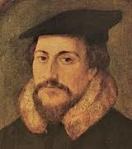
Under each of the figures were the words you see under the pictures below of Martin Luther, John Calvin and Christ. All were dressed as priests holding up a host and a chalice.  Christ was in the center.  Under the three captions, the artist had written in large bold letters: WHO IS RIGHT?

images37

“This is like my body; this is like my blood.”

images38

“This is a symbol of my body; this is a symbol of my blood.”

images39

“This is my Body; this is my Blood.”

Jesus Christ did what no other person ever did or could: He left Himself behind for us in His greatest miracle of all, the Eucharist, made possible by His Redemption, made possible by His Incarnation, made possible by the Fiat the new Eve, made possible by I Am Who Am.

We find the words of Jesus, Himself bearing testimony to His Eternal Presence in the Eucharist, in these New Testament passages:

“I am the bread of life; he who comes to me shall not hunger, and he who believes in me shall never thirst. But I said to you that you have seen me and yet do not believe. All that the Father gives me will come to me; and him who comes to me I will not cast out.  For I have come down from heaven, not to do my own will, but the will of him who sent me; and this is the will of him who sent me, that I should lose nothing of all that he has given me, but raise it up at the last day. For this is the will of my Father, that every one who sees the Son and believes in him should have eternal life; and I will raise him up at the last day.”  John 6:35-40

“Truly, truly, I say to you, he who believes has eternal life. I am the bread of life.  Your fathers ate the manna in the wilderness, and they died.  This is the bread which comes down from heaven, that a man may eat of it and not die.  I am the living bread which came down from heaven; if any one eats of this bread, he will live for ever; and the bread which I shall give for the life of the world is my flesh.” John 6: 47-51

“For I received from the Lord what I also delivered to you, that the Lord Jesus on the night when he was betrayed took bread, and when he had given thanks, he broke it, and said, “This is my body which is for  you. Do this in remembrance of me.” In the same way also the cup, after supper, saying, “This cup is the new covenant in my blood. Do this, as often as you drink it, in remembrance of me.” 1 Cor. 11: 23-25

“Blessed are the merciful, for they will be shown mercy.”

In 06 Scripture & Theology on 2016/01/14 at 12:00 AM

What is a merciful woman like?  First of all, she is not like the morphine addict who slowly poisons herself, becoming completely unaware of the insidious and deadly effects of selfishness on the soul.

The merciful woman is one who is determined to help and support others in a kind and disinterested way.  Recognizing that her own nature is flawed, and loving God in others requires her to begin over and over again, she prays for perseverance.  Her loving heart is vigilant over the needs of others and on guard to protect those entrusted to her care as well as whomever God sends her way.  She generously goes about doing good to others wherever she sees a need, be it spiritual or material, emotional or practical.

Above all, she is a forgiving person and not only disarms by her merciful ways those who have offended her, but does so in a manner that her forgiveness leads the offender to reconsider.  The merciful woman knows that by nature it is easier for her to indulge her desires and plans rather than her duties which she at times looks at with anxiety and impatience.  She is able to be merciful because she is very aware of this natural tendency to prefer her own plans rather than be self-giving,  and thus she makes the effort to relinquish her plans and help those who have erred.  In particular, she is conscious that everything she does has repercussions, and no action is without its impact on those which whom she deals.

In particular, she is not afraid to use opportunities that arise to gently correct family members and friends when they need to be alerted to the dangers of the ways and ideas that are contrary to what is true and right.  Seek to understand others even when they seem to be unaccepting.   By being a friend can cause other to open their hearts so be prepared to help them.

Show mercy and kindness to those who are sad, dejected, ill, or lonely.  Comfort the grieving and the sorrowing.  Never act indifferently to a suffering person; rather spend time with those who need physical or spiritual consolation.  Never seek repayment or praise; that your are doing it for God in your neighbor is a rich enough reward.

We will only have mercy in our hearts when we offer mercy, when we forgive, our enemies from the example and with the help of Christ. Mercy is not simply a matter of giving alms to the poor, but also of being understanding of other people’s defects, overlooking them, helping them not only to cope with them but to love them despite whatever defects they may have. Mercy  suffers and rejoices with others.

Your love of God can be measured by the way you treat those who need help.  Follow Jesus’ example who was always motivated by mercy and always acted out of mercy.  Lead others to turn to Our Lord and His Blessed Mother for solace, peace, and mercy.